Johann Pachelbel
Partie á 5 in G major, T. 338
Released Album
Recent Album
Works Info
Composer:Johann PachelbelGenre:ChamberStyle:Chamber MusicCompose Date:1695Publication Date:1929Average_duration:5:52Johann Pachelbel's "Partie á 5 in G major, T. 338" is a Baroque chamber music piece composed for two violins, two violas, and basso continuo. It was composed in the late 17th century, around 1695, during Pachelbel's time as the organist of the St. Sebaldus Church in Nuremberg, Germany. The piece is divided into four movements: an opening "Prelude," a lively "Allemande," a slow and expressive "Sarabande," and a fast and energetic "Gigue." The "Prelude" sets the tone for the piece with a bright and cheerful melody played by the violins and violas, accompanied by the basso continuo. The "Allemande" is a dance movement in a moderate tempo, featuring intricate counterpoint between the instruments. The "Sarabande" is a slow and stately dance, with a melancholic melody played by the violins and violas. The final "Gigue" is a fast and lively dance, with a playful melody and intricate rhythms. One of the characteristics of Pachelbel's "Partie á 5 in G major" is its use of counterpoint, a hallmark of Baroque music. The piece features complex interweaving melodies played by the different instruments, creating a rich and layered texture. Pachelbel also makes use of the basso continuo, a common feature of Baroque music in which a keyboard instrument (such as a harpsichord or organ) and a bass instrument (such as a cello or bassoon) provide a harmonic foundation for the other instruments. The piece premiered during Pachelbel's lifetime, likely in a private setting such as a salon or court performance. Today, it is a popular piece in the Baroque chamber music repertoire, and is often performed by string ensembles and chamber orchestras. Its lively and joyful melodies, intricate counterpoint, and rich harmonies continue to captivate audiences centuries after its composition.More....
Works Music
Released Music
1
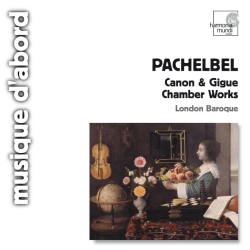
5:23