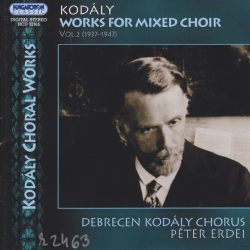
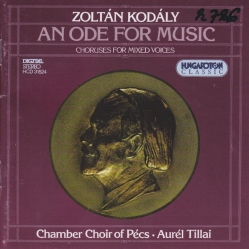
Zoltán Kodály
Beseeching
Released Album
Recent Album
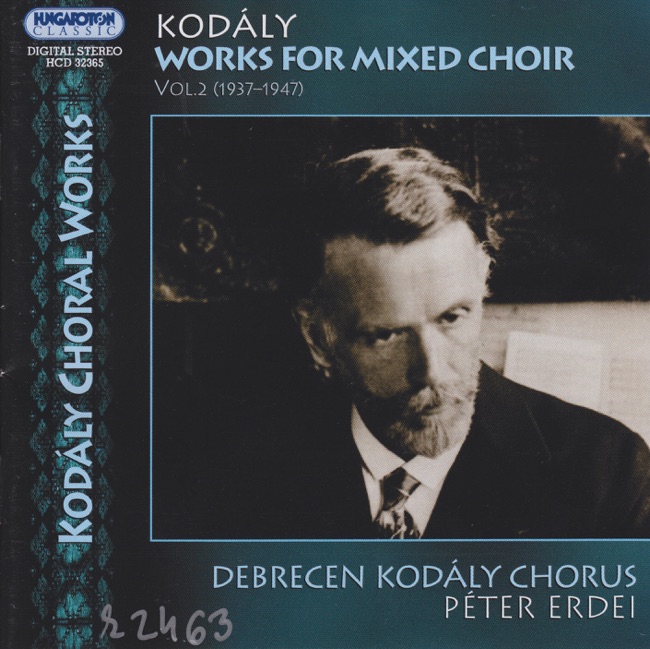
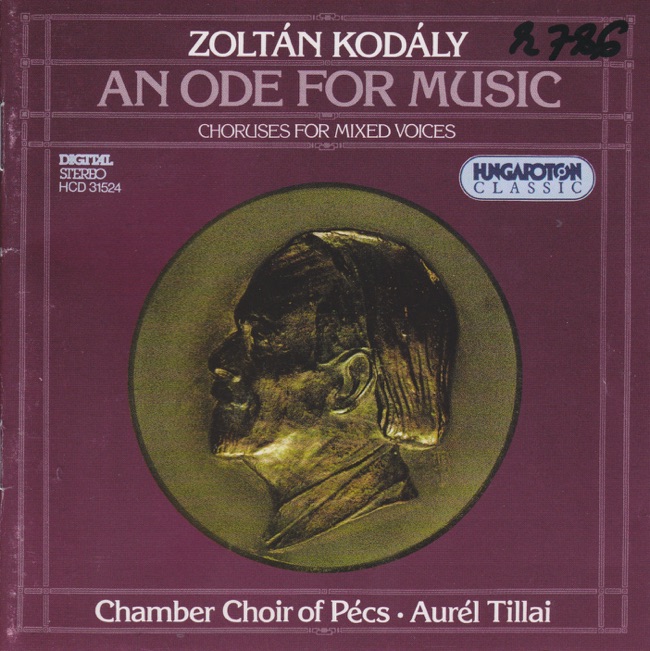
Works Info
Composer:Zoltán KodályGenre:ChoralStyle:ChoralCompose Date:1943Publication Date:1943Average_duration:4:03'Beseeching' is a choral work composed by Zoltán Kodály in 1936. The piece was premiered in Budapest on December 6, 1936, by the Budapest Philharmonic Orchestra and the Hungarian Radio Choir, conducted by the composer himself. The work is divided into three movements, each with its own distinct character and mood. The first movement, marked "Andante sostenuto," is a solemn and introspective prayer, with the choir singing a simple melody in unison. The second movement, marked "Allegro giocoso," is a lively and playful dance, with the choir singing in a more complex and rhythmic style. The final movement, marked "Andante con moto," returns to the solemn mood of the first movement, with the choir singing a more complex and harmonically rich melody. One of the most striking characteristics of 'Beseeching' is its use of Hungarian folk music. Kodály was a pioneer in the field of ethnomusicology, and he incorporated many elements of traditional Hungarian music into his compositions. In 'Beseeching,' he uses folk melodies and rhythms to create a distinctly Hungarian sound, while also incorporating elements of modernist harmony and counterpoint. Another notable characteristic of the work is its use of choral textures. Kodály was a master of choral writing, and he uses the choir to create a rich and varied sound, with different sections of the choir singing in different styles and textures. The work also features a prominent role for the orchestra, with the choir and orchestra often trading off melodies and harmonies. Overall, 'Beseeching' is a powerful and moving work, with a deep sense of spirituality and a strong connection to Hungarian folk traditions. It is a testament to Kodály's skill as a composer and his commitment to preserving and promoting the music of his homeland.More....
Works Music
Released Music