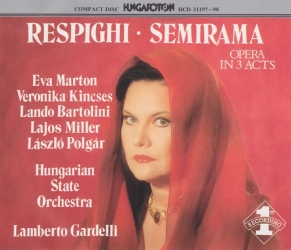
Ottorino Respighi
Semirâma
Released Album
Recent Album
Works Info
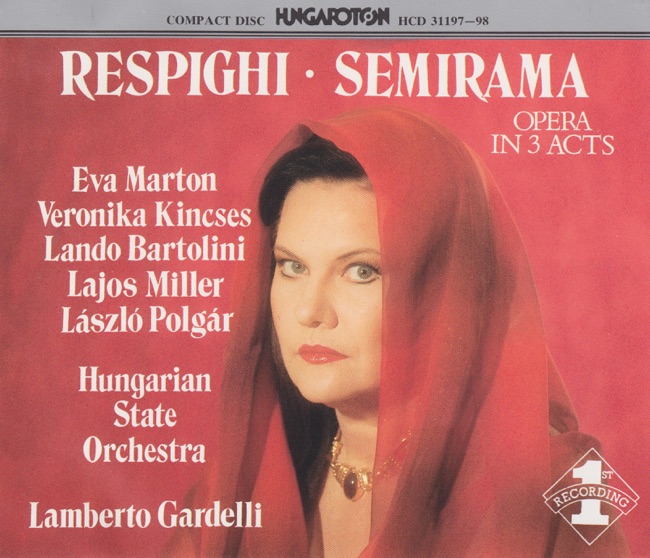
Composer:Ottorino RespighiGenre:OperaStyle:OperaCompose Date:1910Average_duration:142:26Semirâma is an opera in three acts composed by Ottorino Respighi. The opera was composed in 1910 and premiered on February 14, 1910, at the Teatro alla Scala in Milan, Italy. The libretto was written by Claudio Guastalla, and the opera is based on the story of Semiramis, the legendary queen of Assyria. The plot of Semirâma revolves around the love triangle between the queen Semirâma, her husband King Ninus, and the warrior Arsace. Semirâma is in love with Arsace, but he is in love with her daughter, Princess Azema. The queen becomes jealous and orders the death of Azema, but Arsace saves her and they flee together. Semirâma then declares war on Arsace and his allies, but in the end, she is defeated and killed by Arsace. The music of Semirâma is characterized by Respighi's use of exotic and oriental themes, which he achieved through the use of percussion instruments, such as the tambourine and cymbals, and the incorporation of Middle Eastern melodies. The opera also features lush orchestration and vocal writing, with arias and duets that showcase the singers' virtuosity. Semirâma is divided into three acts, each with its own distinct musical style. The first act is characterized by a slow and mysterious introduction, followed by a lively and energetic chorus. The second act features a beautiful duet between Semirâma and Arsace, as well as a haunting aria sung by Azema. The third act is the most dramatic, with a battle scene and a final duet between Semirâma and Arsace. Overall, Semirâma is a beautiful and exotic opera that showcases Respighi's skill as a composer. Its use of Middle Eastern themes and lush orchestration make it a unique and memorable work in the operatic repertoire.More....
Works Music
Released Music