


Heinrich Ignaz Franz von Biber
Mystery Sonata No. 8 in B flat major "The Crowning with Thorns", C. 97
Released Album
Recent Album
Works Info
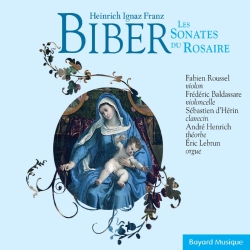
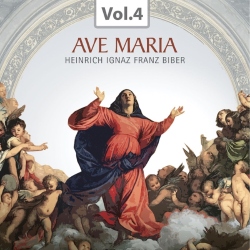
Composer:Heinrich Ignaz Franz von BiberGenre:ChamberStyle:SonataCompose Date:1676Publication Date:1905Average_duration:7:29Movement_count:5Movement ....Heinrich Ignaz Franz von Biber's 'Mystery Sonata No. 8 in B flat major The Crowning with Thorns, C. 97' is a Baroque-era composition that was composed in the late 17th century. The piece is part of a collection of 15 sonatas known as the 'Rosary Sonatas' or 'Mystery Sonatas', which are based on the 15 mysteries of the Rosary. The 'Mystery Sonata No. 8 in B flat major The Crowning with Thorns, C. 97' was premiered in the late 17th century, although the exact date is unknown. The piece is divided into four movements, each of which represents a different aspect of the mystery of the Crowning with Thorns. The first movement, marked 'Praeludium', is a slow and mournful introduction that sets the tone for the rest of the piece. The second movement, marked 'Allamanda', is a lively dance that represents the soldiers who mocked and tormented Jesus during his crucifixion. The third movement, marked 'Aria', is a slow and contemplative piece that represents the suffering of Jesus during the crowning with thorns. The final movement, marked 'Gigue', is a fast and energetic dance that represents the triumph of Jesus over death. One of the most notable characteristics of the 'Mystery Sonata No. 8 in B flat major The Crowning with Thorns, C. 97' is its use of scordatura tuning. Scordatura is a technique in which the strings of the violin are tuned to a different pitch than usual, which allows the composer to create unique and unusual sounds. In this piece, the violin is tuned to B flat, F, B flat, D, which gives the piece a dark and mournful sound. Overall, the 'Mystery Sonata No. 8 in B flat major The Crowning with Thorns, C. 97' is a powerful and emotional piece that captures the suffering and triumph of Jesus during his crucifixion. Its use of scordatura tuning and its four distinct movements make it a unique and memorable composition in the Baroque repertoire.More....
Works Music
Released Music
1
2:2
2
2:2
3
Mystery Sonata No. 8 in B flat major "The Crowning with Thorns", C. 97
II. Guigue - Double I [Presto] - Double II
3:27
4
Mystery Sonata No. 8 in B flat major "The Crowning with Thorns", C. 97
Sonata - Gigue and 2 Doubles
6:19
5
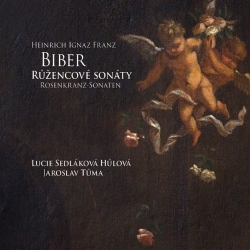
2:34
6
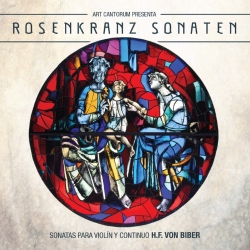
6:25
8
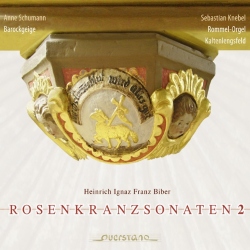
2:29
9
3:48
10
Mystery Sonata No. 8 in B flat major "The Crowning with Thorns", C. 97
IX. Laetatus sum in his, quae dicta sunt mihi 'Psalm 121'
4:20