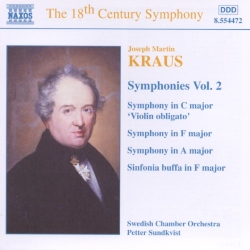
Joseph Martin Kraus
Sinfonia buffa, Vb. 129
Released Album
Recent Album
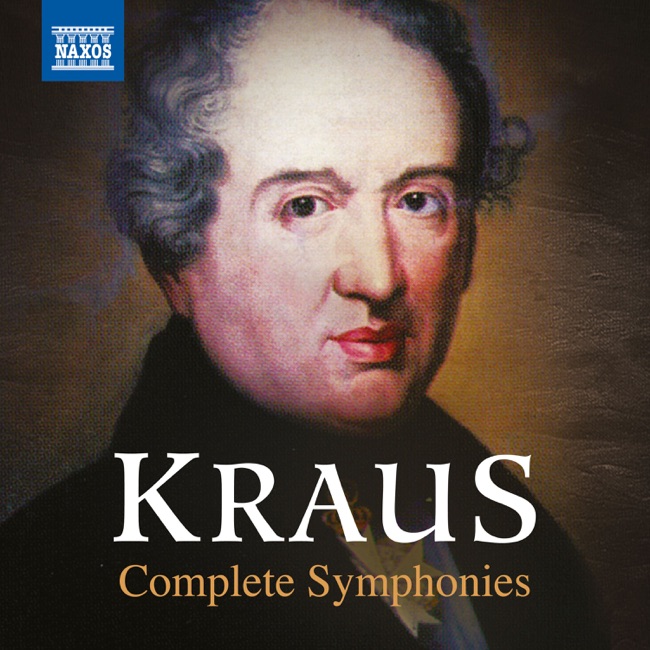
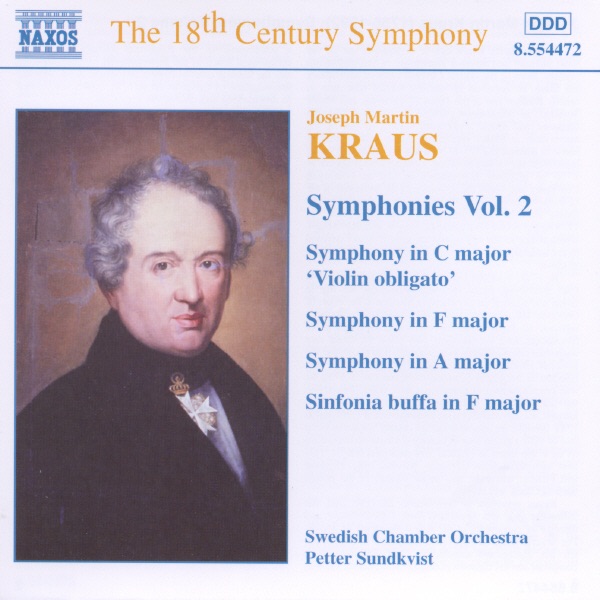
Works Info
Composer:Joseph Martin KrausGenre:SymphonyStyle:SymphonyAverage_duration:16:30Joseph Martin Kraus was a German composer who lived from 1756 to 1792. He was a contemporary of Mozart and Haydn, and his music is often compared to theirs. Kraus was known for his innovative and expressive style, and his works were highly regarded during his lifetime. One of his most famous works is the Sinfonia buffa, Vb. 129. The Sinfonia buffa was composed in 1784 and premiered in Stockholm, Sweden. It is a four-movement work that is scored for two oboes, two horns, two trumpets, timpani, and strings. The piece is known for its humor and lightheartedness, and it is often compared to Mozart's Symphony No. 41, "Jupiter." The first movement of the Sinfonia buffa is marked Allegro con brio, and it begins with a lively and energetic theme that is passed between the different sections of the orchestra. The second movement is a slow Andante, and it features a beautiful melody that is played by the strings. The third movement is a Minuet and Trio, and it is marked Allegretto. The minuet is a playful dance that is full of charm and wit, while the trio is more subdued and lyrical. The final movement is marked Presto, and it is a fast and lively piece that brings the symphony to a thrilling conclusion. One of the characteristics of the Sinfonia buffa is its use of humor and satire. Kraus was known for his wit and his ability to poke fun at the conventions of his time, and this is evident in the Sinfonia buffa. The piece is full of unexpected twists and turns, and it often subverts the listener's expectations. For example, the slow second movement features a melody that is played by the strings, but it is interrupted by a sudden outburst from the horns and trumpets. This unexpected interruption adds a touch of humor to the piece and keeps the listener engaged. Another characteristic of the Sinfonia buffa is its use of orchestration. Kraus was a master of orchestration, and he used the different sections of the orchestra to great effect in this piece. The horns and trumpets are used to add a sense of grandeur and majesty to the piece, while the oboes and strings provide a more delicate and nuanced sound. The timpani are used sparingly but effectively, adding a sense of drama and excitement to the piece. Overall, the Sinfonia buffa is a delightful and charming work that showcases Kraus's talent as a composer. Its use of humor and satire, along with its innovative orchestration, make it a unique and memorable piece of music.More....
Works Music
Released Music