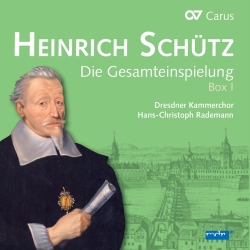
Heinrich Schütz
Alma afflitta, che fai, SWV 4 (Op. 1/4)
Released Album
Recent Album


Works Info
Composer:Heinrich SchützGenre:VocalStyle:MadrigalPublication Date:1611Average_duration:2:51Heinrich Schütz's 'Alma afflitta, che fai' is a sacred vocal work that was composed in the early 17th century. It is part of his Opus 1 collection, which was published in 1611. The work is written for five voices and is scored for two sopranos, alto, tenor, and bass. The premiere of 'Alma afflitta, che fai' is not known, but it is believed to have been performed in Dresden, where Schütz was employed as the court composer for the Elector of Saxony. The work is divided into three movements, each of which has its own distinct characteristics. The first movement is a lament, in which the soul (represented by the soprano voices) cries out in anguish. The alto voice provides a counterpoint to the sopranos, adding depth and complexity to the piece. The tenor and bass voices provide a solid foundation for the vocal lines, creating a rich and full sound. The second movement is a recitative, in which the soul questions why it is suffering and asks for guidance. The vocal lines are more sparse in this section, with the tenor and bass voices providing a simple accompaniment to the soprano and alto lines. The final movement is a joyful affirmation of faith, in which the soul declares its trust in God. The vocal lines are more complex in this section, with the different voices weaving in and out of each other to create a sense of unity and harmony. Overall, 'Alma afflitta, che fai' is a beautiful example of Schütz's skill as a composer. The work showcases his ability to create complex vocal harmonies and to convey a range of emotions through music. It remains a popular piece in the repertoire of early music and is frequently performed in concerts and church services.More....
Works Music
Released Music