Johann Paul von Westhoff
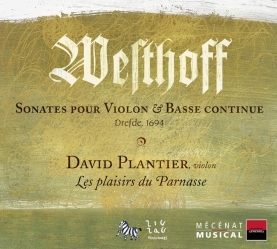
Sonata for violin & continuo No. 3 in D minor
Released Album
Recent Album
Featured Album
Works Info
Composer:Johann Paul von WesthoffGenre:ChamberStyle:Chamber MusicAverage_duration:12:38Movement_count:5Movement ....Johann Paul von Westhoff's Sonata for violin & continuo No. 3 in D minor is a Baroque composition that was composed in the late 17th century. The exact date of composition is unknown, but it is believed to have been written between 1680 and 1690. The sonata is one of the most significant works of Westhoff, who was a German Baroque composer and violinist. The sonata is divided into four movements, which are marked as follows: Preludio, Allemande, Courante, and Sarabande. The first movement, Preludio, is a fast-paced piece that showcases the virtuosity of the violinist. It is characterized by its intricate and complex melodic lines, which are accompanied by the continuo. The second movement, Allemande, is a slow and stately dance that is characterized by its graceful and elegant melody. The third movement, Courante, is a fast-paced dance that is characterized by its lively and energetic rhythm. The final movement, Sarabande, is a slow and melancholic piece that is characterized by its expressive and emotional melody. The sonata is notable for its technical demands on the violinist, particularly in the first movement. The piece requires the performer to execute complex and intricate bowing techniques, such as rapid string crossings and double stops. The sonata also features a number of virtuosic passages, which require the performer to play with great speed and accuracy. Overall, the Sonata for violin & continuo No. 3 in D minor is a significant work of the Baroque era. It is characterized by its intricate and complex melodic lines, its technical demands on the performer, and its expressive and emotional qualities. The sonata premiered in the late 17th century and has since become a staple of the violin repertoire.More....
Works Music
Released Music
Featured Music