Eduard Tubin
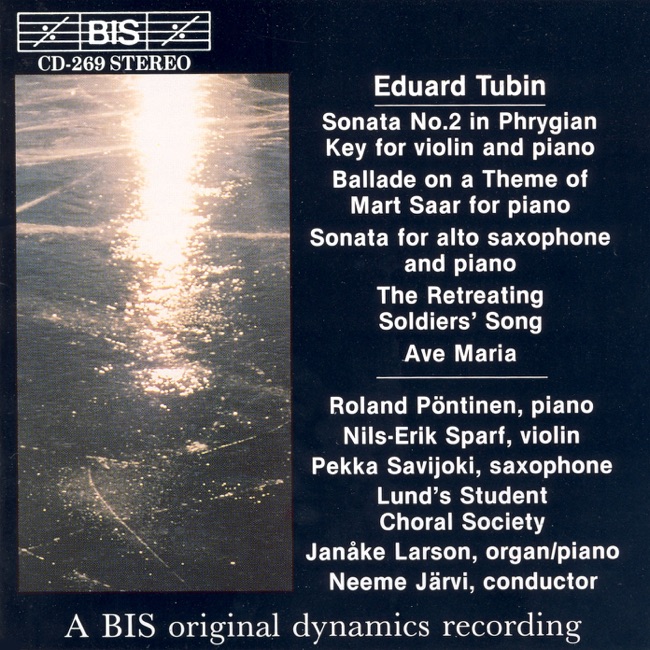
Sonata for alto saxophone & piano
Released Album
Recent Album
Works Info
Composer:Eduard TubinGenre:ChamberStyle:SonataAverage_duration:14:03Eduard Tubin's Sonata for alto saxophone and piano was composed in 1951 and premiered in Tallinn, Estonia in the same year. The piece is divided into three movements: Allegro moderato, Adagio, and Allegro vivace. The first movement, Allegro moderato, begins with a lively and rhythmic saxophone melody that is accompanied by the piano. The saxophone and piano take turns playing the main theme, which is developed throughout the movement. The middle section of the movement features a slower and more lyrical saxophone melody, which is then followed by a return to the opening theme. The second movement, Adagio, is a slow and expressive piece that showcases the saxophone's ability to play long, sustained notes. The piano provides a gentle accompaniment, creating a peaceful and introspective atmosphere. The saxophone and piano engage in a dialogue, with the saxophone playing a mournful melody that is answered by the piano. The final movement, Allegro vivace, is a lively and energetic piece that features a fast and playful saxophone melody. The piano provides a driving accompaniment, creating a sense of urgency and excitement. The saxophone and piano engage in a call-and-response, with the saxophone playing a short phrase that is answered by the piano. The movement ends with a flourish, bringing the piece to a thrilling conclusion. Overall, Tubin's Sonata for alto saxophone and piano is a dynamic and engaging piece that showcases the versatility of the saxophone. The piece features a range of moods and emotions, from the lively and rhythmic opening movement to the introspective and mournful second movement, and finally to the energetic and exciting final movement. The saxophone and piano engage in a dialogue throughout the piece, creating a sense of conversation and collaboration between the two instruments.More....
Works Music
Released Music