


Tomaso Albinoni
Concerti à cinque (12), for 2 oboes, 2 violins, viola, cello & continuo, Op. 9
Released Album
Recent Album


Works Info
Composer:Tomaso AlbinoniGenre:ConcertoStyle:ConcertoCompose Date:1722Publication Date:1722Average_duration:128:58Movement_count:12Movement ....Tomaso Albinoni's Concerti à cinque (12), for 2 oboes, 2 violins, viola, cello & continuo, Op. 9, is a collection of twelve concertos that were composed in the early 18th century. The exact date of composition is not known, but it is believed to have been written between 1714 and 1717. The concertos were first published in Amsterdam in 1722. The Concerti à cinque (12) is divided into twelve movements, with each concerto consisting of three movements: fast-slow-fast. The first movement is usually in a fast tempo and is characterized by its lively and energetic nature. The second movement is typically slower and more lyrical, with a focus on melody and expression. The final movement is usually in a fast tempo and is characterized by its virtuosic and lively nature. The concertos are scored for two oboes, two violins, viola, cello, and continuo. The use of two oboes in the ensemble is a unique feature of Albinoni's concertos, and it adds a distinctive color and texture to the music. The concertos are also notable for their use of counterpoint, with each instrument having its own distinct melodic line that weaves together to create a complex and intricate musical tapestry. The Concerti à cinque (12) is a prime example of the Baroque concerto grosso style, which features a small group of soloists (the concertino) playing against a larger ensemble (the ripieno). The concertos are characterized by their virtuosic solo passages, intricate counterpoint, and lively dance rhythms. The music is also notable for its use of ornamentation, with the soloists often adding trills, turns, and other embellishments to their melodic lines. Overall, the Concerti à cinque (12) is a masterful collection of concertos that showcases Albinoni's skill as a composer and his ability to create music that is both technically challenging and musically expressive. The concertos have remained popular with audiences and performers alike, and they continue to be an important part of the Baroque repertoire.More....
Works Music
Released Music
1
Concerti à cinque (12), for 2 oboes, 2 violins, viola, cello & continuo, Op. 9
No. 2 : 1. Allegro e non presto
4:11
2
Concerti à cinque (12), for 2 oboes, 2 violins, viola, cello & continuo, Op. 9
Op. 9, No. 2: Adagio
4:45
3
Concerti à cinque (12), for 2 oboes, 2 violins, viola, cello & continuo, Op. 9
No. 2 for Oboe, Strings, and Continuo: 2. Adagio
5:26
4
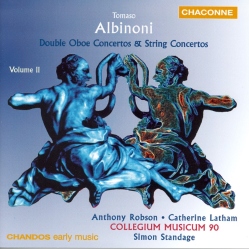
Concerti à cinque (12), for 2 oboes, 2 violins, viola, cello & continuo, Op. 9
Concerto for Strings, Op 09 No.10
3:34
5
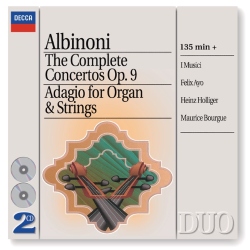
Concerti à cinque (12), for 2 oboes, 2 violins, viola, cello & continuo, Op. 9
No. 10 in F. 2. Adagio
4:5
6
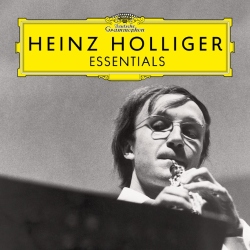
5:26
7
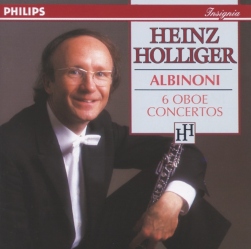
Concerti à cinque (12), for 2 oboes, 2 violins, viola, cello & continuo, Op. 9
No 2 in D minor, Adagio
5:25
8

Concerti à cinque (12), for 2 oboes, 2 violins, viola, cello & continuo, Op. 9
No. 10 in F : 2. Adagio
4:8
Main Perform Artists
Harpsichord
Oboe
Oboe
Violin