


Giovanni Pierluigi da Palestrina
Fourth Book of Motets from Canticis cantoricum
Released Album
Recent Album
Featured Album
Works Info
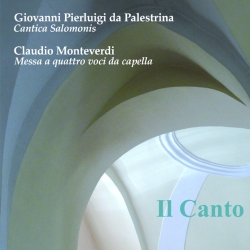
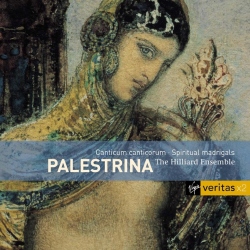
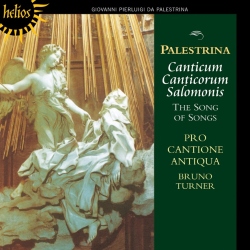
Composer:Giovanni Pierluigi da PalestrinaGenre:ChoralStyle:MotetCompose Date:1584Average_duration:72:20Movement_count:29Movement ....The Fourth Book of Motets from Canticis cantoricum is a collection of sacred choral music composed by Giovanni Pierluigi da Palestrina. It was published in 1584 and is considered one of his most significant works. The book contains 29 motets, each with its own unique character and style. The premiere of the Fourth Book of Motets from Canticis cantoricum is not well documented, but it is likely that it was first performed in Rome, where Palestrina spent most of his career. The motets were written for use in the Catholic liturgy, and they reflect the composer's deep understanding of the text and his ability to create music that enhances its meaning. The motets in the Fourth Book are divided into three sections, each with its own distinct character. The first section contains motets that are based on the Psalms, and they are characterized by their simplicity and clarity. The second section contains motets that are based on the Song of Solomon, and they are characterized by their sensuality and emotional intensity. The third section contains motets that are based on the Book of Wisdom, and they are characterized by their wisdom and spiritual depth. One of the most notable characteristics of the Fourth Book of Motets from Canticis cantoricum is its use of polyphony. Palestrina was a master of polyphonic composition, and he used it to great effect in these motets. The voices weave in and out of each other, creating a rich tapestry of sound that is both complex and beautiful. Another characteristic of the Fourth Book is its use of dissonance. Palestrina was known for his ability to use dissonance in a way that was both expressive and controlled, and he does so in many of the motets in this collection. The dissonances are always resolved, creating a sense of tension and release that is both satisfying and emotionally powerful. Overall, the Fourth Book of Motets from Canticis cantoricum is a masterpiece of sacred choral music. Its combination of polyphony, dissonance, and expressive text setting make it a powerful and moving work that continues to be performed and admired today.More....
Works Music
Released Music
Featured Music
2
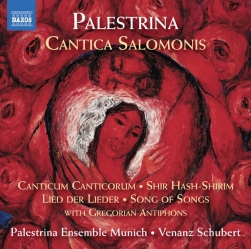
Fourth Book of Motets from Canticis cantoricum
Antiphon: Trahe me - Motet 2: Trahe me, post te curremus
4:4
3
Fourth Book of Motets from Canticis cantoricum
Antiphon: Nigra sum - Motet 3: Nigra sum, sed formosa
3:34
4
Fourth Book of Motets from Canticis cantoricum
Antiphon: Nolite me considerare, quod fusca sim - Motet 4: Vineam meam non custodivi
3:33
5
Fourth Book of Motets from Canticis cantoricum
Antiphon: Dum esset rex in accubito suo - Motet 6: Pulchrae sunt genae tuae
4:15
6
Fourth Book of Motets from Canticis cantoricum
Antiphon: Fasciculus myrrhae - Motet 7: Fasciculus myrrhae
3:48
7
Fourth Book of Motets from Canticis cantoricum
Antiphon: Veni de Libano, sponsa mea - Motet 10: Vulnerasti cor meum
5:14
8
Fourth Book of Motets from Canticis cantoricum
Antiphon: Sicut lilium - Motet 11: Sicut lilium inter spinas
3:44
9
Fourth Book of Motets from Canticis cantoricum
Antiphon: Fulcite me floribus, stipate me malis - Motet 12: Introduxit me rex
3:16
10
Fourth Book of Motets from Canticis cantoricum
Antiphon: Laeva ejus - Motet 13: Laeva eius sub capite meo
3:21
11
Fourth Book of Motets from Canticis cantoricum
Antiphon: Quis est iste, qui venit de Edom? - Motet 14: Vox dilecti mei
3:49
12
Fourth Book of Motets from Canticis cantoricum
Antiphon: Quae est ista, quae ascendit sicut aurora - Motet 23: Quae est ista, quae progreditur
4:53
Main Perform Artists
Tenor Vocal
Baritone Vocal
Counter Tenor Vocal
Tenor Vocal
Tenor Vocal
Baritone Vocal
Bass Vocal
Counter Tenor Vocal
Tenor Vocal
Counter Tenor Vocal