Jacobus Vaet
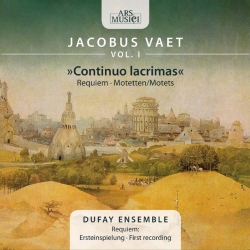
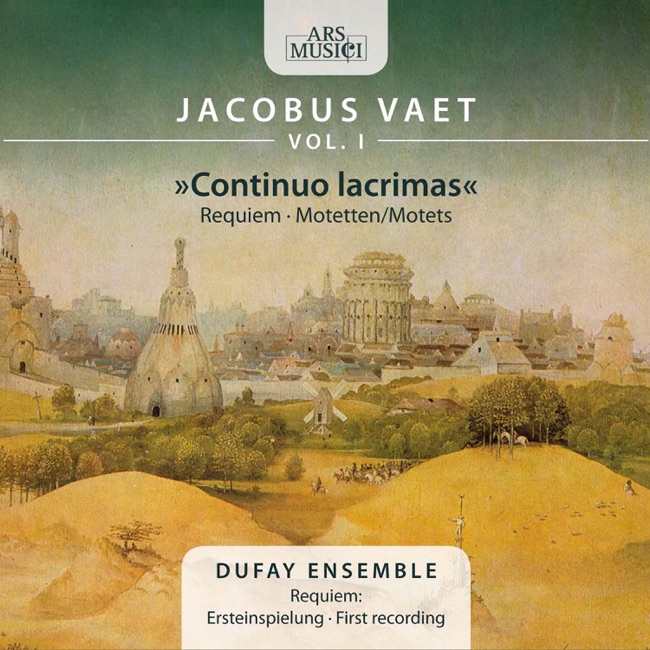
Continuo lachrimas
Released Album
Recent Album
Works Info
Composer:Jacobus VaetGenre:ChoralStyle:ChoralAverage_duration:3:42Jacobus Vaet was a Flemish composer who lived during the Renaissance period. He was born in Kortrijk, Belgium, in 1529 and died in Vienna, Austria, in 1567. Vaet was a prolific composer, and his works were highly regarded during his lifetime. One of his most famous compositions is "Continuo lachrimas," which was written in 1556. "Continuo lachrimas" is a six-part motet that was composed for the funeral of Maria of Austria, the daughter of Charles V and Isabella of Portugal. The piece is written in Latin and is based on a text by the Roman poet Ovid. The title of the piece translates to "I continue to weep," which reflects the mournful nature of the composition. The motet is divided into six movements, each of which is based on a different section of the text. The first movement is a slow and mournful introduction that sets the tone for the rest of the piece. The second movement is more lively and features a complex interplay between the different vocal parts. The third movement is a slower and more contemplative section that features a solo soprano voice. The fourth movement is a fast and energetic section that features a lot of rhythmic complexity. The fifth movement is a slower and more somber section that features a solo alto voice. The final movement is a reprise of the first movement, but with a more hopeful and uplifting tone. One of the characteristics of "Continuo lachrimas" is its use of chromaticism. Vaet uses chromaticism to create a sense of tension and dissonance, which adds to the mournful nature of the piece. Another characteristic of the piece is its use of imitative polyphony. Vaet uses imitative polyphony to create a sense of unity and coherence between the different vocal parts. "Continuo lachrimas" premiered at the funeral of Maria of Austria in 1558. The piece was highly regarded by contemporary audiences and has remained a popular composition to this day. Vaet's use of chromaticism and imitative polyphony in "Continuo lachrimas" has influenced many composers who came after him, including Johann Sebastian Bach and Wolfgang Amadeus Mozart.More....
Works Music
Released Music