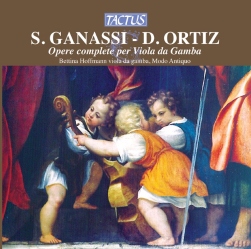
Diego Ortiz
Recercata No. 4
Released Album
Recent Album
Featured Album
Works Info
Composer:Diego OrtizGenre:ChamberStyle:Chamber MusicAverage_duration:1:14Diego Ortiz was a Spanish composer and music theorist who lived during the Renaissance period. He is best known for his collection of music entitled "Trattado de Glosas," which was published in 1553. This collection contains a series of variations on popular songs of the time, as well as several original compositions, including the "Recercata No. 4." The "Recercata No. 4" is a piece for solo instrument, likely intended for the viola da gamba, a popular instrument during the Renaissance period. The piece is composed in a style known as a "recercar," which was a type of instrumental composition that was popular in Italy during the 16th century. Recercars were typically composed as a series of variations on a single theme, and were often used as preludes or introductions to vocal music. The "Recercata No. 4" is composed in three movements, each of which is based on a different theme. The first movement is a lively and energetic piece, characterized by its use of fast, virtuosic runs and intricate ornamentation. The second movement is more subdued, with a slower tempo and a more contemplative mood. The third movement returns to the lively and energetic style of the first movement, with a series of fast runs and intricate ornamentation. One of the most notable characteristics of the "Recercata No. 4" is its use of counterpoint, which is a technique in which two or more melodic lines are played simultaneously. Ortiz was a master of counterpoint, and his compositions are known for their intricate and complex interplay between different melodic lines. The "Recercata No. 4" is no exception, and the piece is filled with intricate and complex counterpoint that showcases Ortiz's skill as a composer. The "Recercata No. 4" was likely composed in the mid-16th century, and it is unclear when it was first performed or premiered. However, the piece has remained popular among musicians and music lovers alike, and it is still frequently performed and recorded today. Its intricate counterpoint and virtuosic runs make it a challenging and rewarding piece for performers, and its lively and energetic style makes it a joy to listen to.More....
Works Music
Released Music
Featured Music