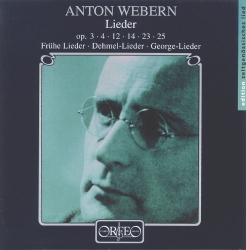
Anton Webern
Songs (5) after Dehmel, for voice & piano
Released Album
Recent Album
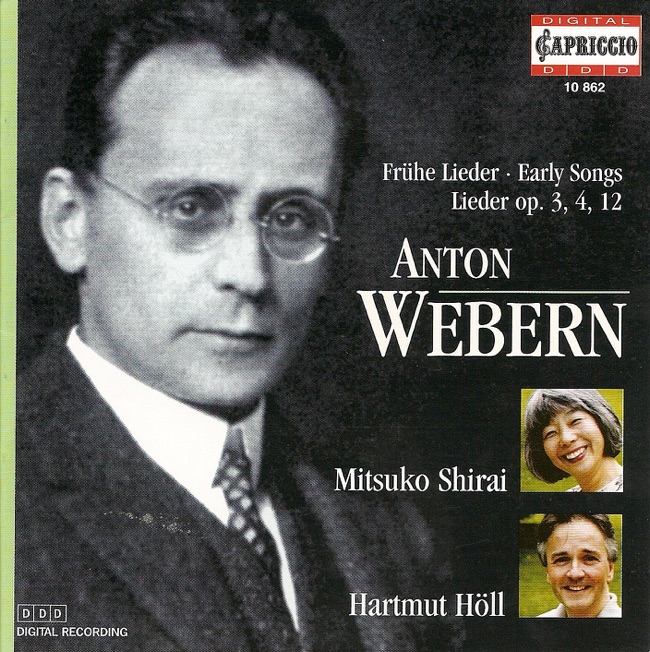
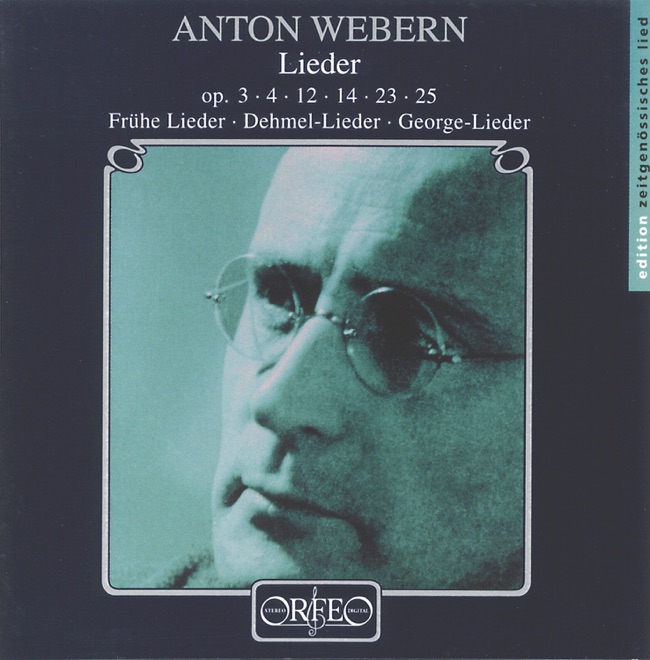
Works Info
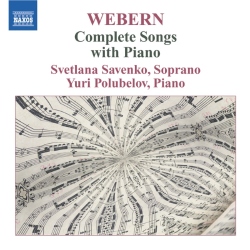
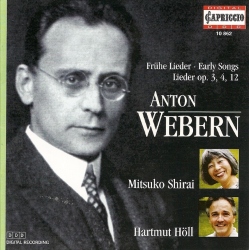
Composer:Anton WebernGenre:VocalStyle:Vocal MusicCompose Date:1906 - 1908Average_duration:13:34Movement_count:5Movement ....Anton Webern's 'Songs (5) after Dehmel, for voice & piano' is a song cycle composed in 1908. The premiere of the work took place in Vienna in 1910. The cycle consists of five movements, each of which sets a poem by Richard Dehmel to music. The first movement, "Nachtwandler," is characterized by a haunting, dreamlike quality. The piano part is sparse and atmospheric, while the vocal line is angular and dissonant, reflecting the disorientation of the sleepwalker in the poem. The second movement, "Gesang I," is more lyrical and expressive. The vocal line is more melodic, with a wider range and more fluid phrasing. The piano part is more active, with arpeggios and cascading figures that support the vocal line. The third movement, "Gesang II," is more introspective and subdued. The vocal line is more restrained, with a narrower range and more static phrasing. The piano part is similarly restrained, with a simple, repetitive accompaniment that creates a sense of stasis. The fourth movement, "Gesang III," is more dramatic and intense. The vocal line is more declamatory, with a more forceful delivery and a wider range. The piano part is similarly forceful, with pounding chords and driving rhythms that create a sense of urgency. The final movement, "Gesang IV," is the most abstract and experimental of the cycle. The vocal line is fragmented and disjointed, with sudden leaps and unexpected pauses. The piano part is similarly fragmented, with jagged rhythms and dissonant harmonies that create a sense of disorientation. Overall, Webern's 'Songs (5) after Dehmel, for voice & piano' is a highly expressive and innovative work that showcases the composer's unique approach to vocal music. The cycle is characterized by its use of dissonant harmonies, fragmented melodies, and atmospheric textures, which create a sense of ambiguity and uncertainty that reflects the themes of the Dehmel poems.More....
Works Music
Released Music