Jacques Hotteterre
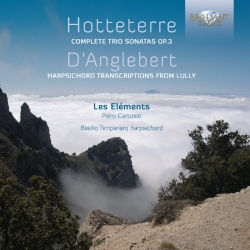
Trio Sonata for 2 instruments & continuo in E minor, Op. 3/4
Released Album
Recent Album
Works Info
Composer:Jacques HotteterreGenre:ChamberStyle:Chamber MusicCompose Date:1712Average_duration:10:35Movement_count:4Movement ....The Trio Sonata for 2 instruments & continuo in E minor, Op. 3/4, was composed by Jacques Hotteterre, a French Baroque composer and flutist. The piece was composed in the early 18th century, around 1708, and was premiered in Paris, France. The Trio Sonata consists of four movements: Prelude, Allemande, Sarabande, and Gigue. The Prelude is a lively and energetic movement, featuring intricate counterpoint between the two instruments and the continuo. The Allemande is a slower, more stately dance, with a more subdued mood. The Sarabande is a slow and expressive movement, featuring long, flowing melodies and rich harmonies. The Gigue is a fast and lively dance, with a playful and joyful character. The Trio Sonata is characterized by its use of the Baroque style, with its emphasis on ornamentation, counterpoint, and harmonic complexity. The piece features a virtuosic flute part, with fast runs, trills, and other ornamentation, as well as a rich and varied continuo part, featuring a harpsichord, cello, or other bass instrument. The two instruments often engage in intricate dialogues, with each taking turns playing the melody or accompanying the other. Overall, the Trio Sonata for 2 instruments & continuo in E minor, Op. 3/4, is a beautiful and engaging piece of Baroque music, showcasing the virtuosity and musicality of Jacques Hotteterre and his contemporaries. Its intricate counterpoint, rich harmonies, and expressive melodies make it a true masterpiece of the Baroque era.More....
Works Music
Released Music
1
2:40
2
3:6
3
1:22
4

1:18