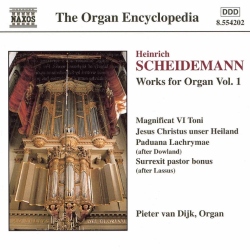
Heinrich Scheidemann
Magnificat of the sixth tone
Released Album
Recent Album

Works Info
Composer:Heinrich ScheidemannGenre:ChoralStyle:MagnificatAverage_duration:17:07Heinrich Scheidemann was a German composer and organist who lived from 1595 to 1663. He was a prominent figure in the North German organ school, which was a group of composers and performers who were active in the 17th century in the region of northern Germany. Scheidemann was known for his organ music, but he also composed vocal music, including a Magnificat of the sixth tone. The Magnificat of the sixth tone is a setting of the Magnificat, which is a hymn of praise to the Virgin Mary. The text of the Magnificat comes from the Gospel of Luke, and it is traditionally sung during the evening prayer service in the Catholic Church. Scheidemann's setting of the Magnificat is scored for five voices (SSATB) and continuo. The Magnificat of the sixth tone was composed in the early 17th century, but the exact date is not known. It was likely composed during Scheidemann's time as the organist at the St. Catherine's Church in Hamburg, where he worked from 1629 until his death in 1663. The Magnificat of the sixth tone was likely premiered at St. Catherine's Church, where Scheidemann would have had access to a choir and musicians to perform his music. The Magnificat of the sixth tone is divided into eight movements, each of which corresponds to a section of the Magnificat text. The first movement is an instrumental introduction, which sets the tone for the piece. The second movement is a setting of the first part of the Magnificat text, "My soul magnifies the Lord." This movement is characterized by its lively rhythms and joyful melody. The third movement is a setting of the second part of the Magnificat text, "And my spirit rejoices in God my Savior." This movement is more subdued than the previous one, with a slower tempo and more contemplative mood. The fourth movement is a setting of the third part of the Magnificat text, "For he has looked on the humble estate of his servant." This movement is characterized by its use of imitation, with the voices echoing each other in a call-and-response pattern. The fifth movement is a setting of the fourth part of the Magnificat text, "For behold, from now on all generations will call me blessed." This movement is a duet between the alto and tenor voices, with the other voices providing a harmonic backdrop. The sixth movement is a setting of the fifth part of the Magnificat text, "For he who is mighty has done great things for me." This movement is characterized by its use of chromaticism, which creates a sense of tension and release. The seventh movement is a setting of the sixth part of the Magnificat text, "He has shown strength with his arm." This movement is a lively and energetic setting, with the voices and continuo playing off each other in a playful manner. The final movement is a setting of the seventh and eighth parts of the Magnificat text, "He has helped his servant Israel, in remembrance of his mercy." This movement is a grand finale, with all the voices and instruments coming together in a triumphant setting. Overall, the Magnificat of the sixth tone is a masterful setting of the Magnificat text. Scheidemann's use of different musical techniques and styles creates a varied and engaging work that is a testament to his skill as a composer.More....
Works Music
Released Music
1
2:35
4
2:29
5
8:57