


Heinrich Scheidemann
Released Album
Keyboard
-
 January 3, 2025
 -
-
 October 8, 2021
 -
 November 20, 2020
 -
-
Choral
Artist Info
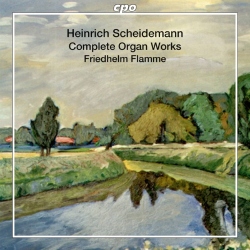
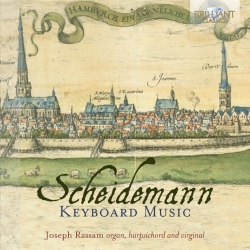
Role:ComposerCountry: GermanyBirth:1595 in Wöhrden, HolsteinDeath:September 26, 1663 in Hamburg, GermanyPeriod:BaroqueGenre:KeyboardHeinrich Scheidemann was a German composer and organist who lived during the 17th century. He was born in Wöhrden, a small town in the northern part of Germany, in the year 1595. His father, David Scheidemann, was also a musician and served as the town's organist. It is believed that Heinrich received his early musical training from his father. Heinrich Scheidemann's musical talent was evident from a young age, and he quickly became known as a skilled organist. In 1611, at the age of 16, he was appointed as the organist at the St. Mary's Church in Lübeck, a position he held for the rest of his life. Lübeck was a thriving city during this time, and its churches were known for their impressive organs and music programs. Scheidemann's appointment as the organist at St. Mary's was a significant achievement, and it allowed him to develop his skills as a composer and performer. Scheidemann's music was heavily influenced by the North German organ tradition, which was characterized by complex polyphony and virtuosic improvisation. He was also influenced by the works of his contemporaries, including Jan Pieterszoon Sweelinck and Samuel Scheidt. Scheidemann's compositions were primarily written for the organ, and he is considered one of the most important composers of organ music from the early Baroque period. One of Scheidemann's most significant contributions to music was his development of the chorale fantasia. This musical form was based on Lutheran chorales, which were hymns sung by the congregation during church services. Scheidemann's chorale fantasias were elaborate works that incorporated the chorale melody into a complex polyphonic texture. These works were often used as preludes or postludes during church services and were an important part of the Lutheran musical tradition. Scheidemann's compositions were also notable for their use of chromaticism and dissonance. He was one of the first composers to use these techniques in organ music, and his works were considered daring and innovative for their time. Scheidemann's music was also known for its virtuosic keyboard writing, which required a high level of technical skill from the performer. Despite his success as a composer and organist, Scheidemann's personal life was marked by tragedy. He married twice, but both of his wives died young, leaving him with several young children to care for. Scheidemann himself died in 1663 at the age of 68, leaving behind a legacy of innovative and influential music. Some of Scheidemann's most famous works include his chorale fantasias, which include settings of hymns such as "Allein Gott in der Höh sei Ehr" and "Wir glauben all an einen Gott". He also wrote a number of preludes and fugues, as well as a set of variations on the popular tune "La Monica". Scheidemann's music was highly regarded during his lifetime, and his influence can be seen in the works of later composers such as Johann Sebastian Bach. In conclusion, Heinrich Scheidemann was a significant figure in the development of Baroque organ music. His innovative use of chromaticism and dissonance, as well as his development of the chorale fantasia, were important contributions to the musical tradition of his time. Despite personal tragedy, Scheidemann's legacy lives on through his music, which continues to be performed and studied by musicians and scholars today.More....
Recent Artist Music
10
2:35
Copyright Ⓒ 2013 Davinci Finger. All rights reseved
Service Terms & Policy