Jacob Obrecht
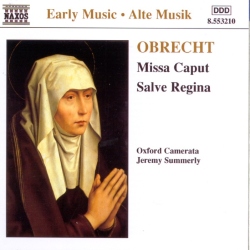
Salve regina, motet for 4 voices
Released Album
Recent Album

Featured Album
Works Info
Composer:Jacob ObrechtGenre:ChoralStyle:ChoralAverage_duration:8:03Jacob Obrecht was a prominent composer of the Renaissance period, known for his sacred music compositions. One of his most famous works is the 'Salve Regina', a motet for 4 voices. This piece was composed in the late 15th century, around 1480-1490. The 'Salve Regina' was first performed in the Netherlands, where Obrecht was born and spent most of his life. It was likely performed in a church or cathedral, as it was a sacred piece of music. The motet is written in Latin, which was the language of the Catholic Church at the time. The 'Salve Regina' is divided into four movements, each of which is based on a different section of the Salve Regina prayer. The first movement is based on the opening lines of the prayer, "Salve Regina, mater misericordiae" (Hail, holy Queen, mother of mercy). The second movement is based on the line "Ad te clamamus, exsules filii Hevae" (To thee do we cry, poor banished children of Eve). The third movement is based on the line "O clemens, o pia, o dulcis Virgo Maria" (O clement, O loving, O sweet Virgin Mary). The final movement is based on the line "Et Jesum, benedictum fructum ventris tui, nobis post hoc exsilium ostende" (Show unto us the blessed fruit of thy womb, Jesus, after this our exile). The 'Salve Regina' is characterized by its rich harmonies and complex polyphony. Obrecht uses four voices to create a dense and intricate texture, with each voice weaving in and out of the others. The piece is also notable for its use of imitation, where one voice will repeat a melody that has just been played by another voice. Overall, the 'Salve Regina' is a beautiful and moving piece of music that showcases Obrecht's skill as a composer. Its enduring popularity is a testament to its timeless beauty and the enduring power of sacred music.More....
Works Music
Released Music
Featured Music