Hanns Eisler
Die Landschaft des Exils
Released Album
Recent Album

Featured Album
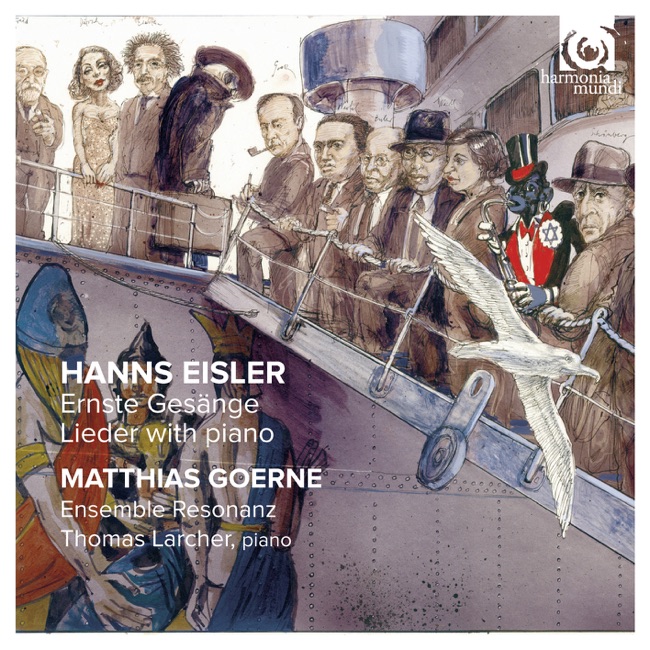
Works Info
Composer:Hanns EislerGenre:VocalStyle:Vocal MusicAverage_duration:1:28Die Landschaft des Exils (The Landscape of Exile) is a song cycle composed by Hanns Eisler in 1941. The work was premiered in New York City in 1942, with the composer himself at the piano and Lotte Lenya as the vocalist. The cycle consists of six movements, each of which sets a poem by a different author. The first movement, "An den kleinen Radioapparat" (To the Little Radio), sets a poem by Bertolt Brecht. The music is characterized by a driving rhythm and a dissonant, angular melody that reflects the poem's themes of isolation and alienation. The second movement, "Die Landschaft des Exils" (The Landscape of Exile), sets a poem by Johannes R. Becher. The music is more lyrical and introspective than the first movement, with a haunting melody that evokes the sense of loss and displacement that comes with exile. The third movement, "Und es sind die finstern Zeiten" (And These Are the Dark Times), sets a poem by Brecht. The music is somber and mournful, with a slow, dirge-like tempo that underscores the poem's themes of despair and hopelessness. The fourth movement, "Über den Selbstmord" (On Suicide), sets a poem by Becher. The music is tense and unsettling, with a jagged, dissonant melody that reflects the poem's themes of desperation and despair. The fifth movement, "Die Ballade vom Wasserrad" (The Ballad of the Waterwheel), sets a poem by Brecht. The music is more upbeat and playful than the previous movements, with a jaunty, folk-like melody that belies the poem's dark themes of exploitation and oppression. The final movement, "An den deutschen Mond" (To the German Moon), sets a poem by Becher. The music is more hopeful and optimistic than the previous movements, with a soaring, triumphant melody that reflects the poem's themes of resilience and perseverance in the face of adversity. Overall, Die Landschaft des Exils is a powerful and moving work that captures the experience of exile and the emotional toll it takes on those who are forced to leave their homes and communities behind. Eisler's music is at times dissonant and unsettling, but it is always deeply expressive and emotionally resonant, perfectly complementing the powerful poetry of Brecht and Becher.More....
Works Music
Released Music

Featured Music