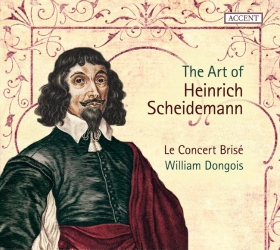
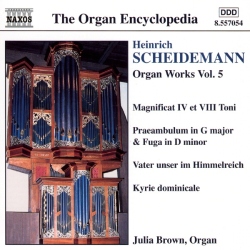
Heinrich Scheidemann
Fuga for organ in D minor
Released Album
Recent Album
Works Info
Composer:Heinrich ScheidemannGenre:KeyboardStyle:KeyboardAverage_duration:2:09Heinrich Scheidemann was a German composer and organist who lived from 1595 to 1663. He was a prominent figure in the North German organ school, which was a group of composers and performers who were active in the 17th century. Scheidemann's Fuga for organ in D minor is one of his most famous works, and it is a prime example of the style and techniques of the North German organ school. The Fuga for organ in D minor was composed by Scheidemann in the early 17th century, although the exact date of composition is not known. It is believed to have been written sometime between 1615 and 1620. The piece was likely composed for use in church services, as Scheidemann was the organist at the St. Catherine's Church in Hamburg at the time. The Fuga for organ in D minor is a single-movement work that is structured as a fugue. A fugue is a type of composition in which a main theme, or subject, is introduced and then developed through a series of imitative entries. In the case of Scheidemann's Fuga, the subject is a short, rhythmic motif that is introduced at the beginning of the piece and then repeated and developed throughout. The Fuga for organ in D minor is characterized by its use of counterpoint, which is the technique of combining multiple melodic lines to create a complex and harmonically rich texture. Scheidemann uses counterpoint to great effect in the Fuga, creating a dense and intricate web of sound that is both challenging and rewarding for the listener. The Fuga for organ in D minor is also notable for its use of chromaticism, which is the technique of using notes that are outside of the diatonic scale. Scheidemann employs chromaticism to create a sense of tension and dissonance in the piece, which is then resolved through the use of traditional harmonic progressions. Overall, Scheidemann's Fuga for organ in D minor is a masterful example of the North German organ school style. Its use of counterpoint, chromaticism, and traditional harmonic progressions make it a challenging and rewarding piece for both performers and listeners alike.More....
Works Music
Released Music
1
2:16