


Heinrich Ignaz Franz von Biber
Sonata for violin & continuo No. 6 in C minor, C. 143
Released Album
Recent Album
Works Info
Composer:Heinrich Ignaz Franz von BiberGenre:ChamberStyle:SonataCompose Date:1681Publication Date:1681Average_duration:12:44Heinrich Ignaz Franz von Biber's Sonata for violin & continuo No. 6 in C minor, C. 143, is a Baroque-era composition that was composed in the late 17th century. The exact date of composition is unknown, but it is believed to have been written between 1676 and 1681. The sonata was premiered in Salzburg, Austria, where Biber was employed as a court musician. The sonata consists of four movements: Preludio, Allemande, Sarabande, and Gigue. The Preludio is a fast-paced movement that showcases the virtuosic abilities of the violinist. The Allemande is a slower, more contemplative movement that features intricate counterpoint between the violin and continuo. The Sarabande is a stately dance in triple meter that is characterized by its expressive melodies and ornamentation. The final movement, Gigue, is a lively dance in compound meter that brings the sonata to a joyful conclusion. Biber's Sonata for violin & continuo No. 6 in C minor is notable for its use of scordatura tuning, a technique in which the strings of the violin are tuned to a different pitch than their standard tuning. In this sonata, the violin is tuned to C-G-d'-a', which allows for a wider range of harmonies and sonorities. The use of scordatura also allows the violinist to play certain passages with greater ease and clarity. Overall, Biber's Sonata for violin & continuo No. 6 in C minor is a masterful example of Baroque-era chamber music. Its intricate counterpoint, expressive melodies, and virtuosic violin writing make it a challenging and rewarding work for performers and listeners alike.More....
Works Music
Released Music
1
2:8
2
Sonata for violin & continuo No. 6 in C minor, C. 143
Paßagaglia Adagissimo (Minoritenkonvent Wien)
12:45
3
4:8
4
4:26
5
5:58
8
5:37
9
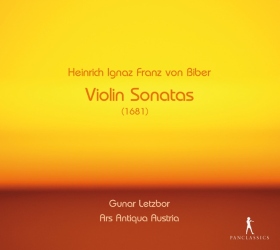
5:4
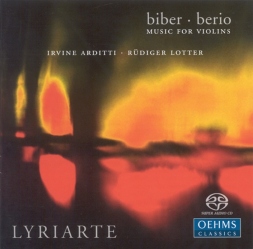
Main Perform Artists