


Dietrich Buxtehude
Sonata for violin, viola da gamba & harpsichord in A major, Op. 2/5, BuxWV 263
Released Album
Recent Album

Works Info
Composer:Dietrich BuxtehudeGenre:ChamberStyle:Chamber MusicAverage_duration:9:18Dietrich Buxtehude's Sonata for violin, viola da gamba & harpsichord in A major, Op. 2/5, BuxWV 263, is a Baroque chamber music piece composed in the late 17th century. The exact date of composition is unknown, but it is believed to have been written between 1680 and 1690. The sonata is one of Buxtehude's most famous works and is considered a masterpiece of the Baroque era. The sonata consists of four movements: Prelude, Allegro, Adagio, and Gigue. The Prelude is a short, improvisatory piece that sets the tone for the rest of the sonata. The Allegro is a lively and energetic movement that showcases the virtuosity of the performers. The Adagio is a slow and expressive movement that features a beautiful melody played by the violin and viola da gamba. The Gigue is a fast and lively dance that brings the sonata to a thrilling conclusion. One of the most notable characteristics of the sonata is its use of counterpoint. Buxtehude was a master of counterpoint, and the sonata features intricate and complex interweaving of melodies between the three instruments. The sonata also features a wide range of dynamics, from soft and delicate to loud and powerful. The harpsichord is used primarily as a continuo instrument, providing a harmonic foundation for the violin and viola da gamba. The Sonata for violin, viola da gamba & harpsichord in A major, Op. 2/5, BuxWV 263, premiered in the late 17th century, likely in Buxtehude's hometown of Lübeck, Germany. The sonata was written during a time when chamber music was becoming increasingly popular, and it is a testament to Buxtehude's skill as a composer that the sonata remains a beloved and frequently performed work to this day.More....
Works Music
Released Music
1
1:1
2
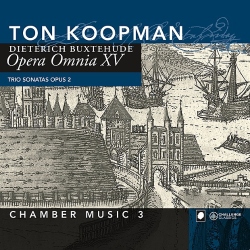
Sonata for violin, viola da gamba & harpsichord in A major, Op. 2/5, BuxWV 263
Sonata in A, op. 2/5, BuxWV 263
10:41
3
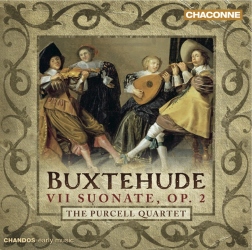
Sonata for violin, viola da gamba & harpsichord in A major, Op. 2/5, BuxWV 263
Sonata in A major, Op. 2/5, BuxWV 263
8:46
4
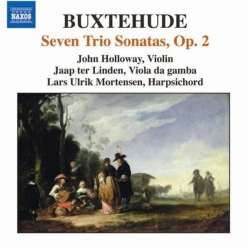
Sonata for violin, viola da gamba & harpsichord in A major, Op. 2/5, BuxWV 263
Adagio: Viola da gamba solo
1:21