


Erik Satie
Mélodies (3) of 1886
Released Album
Recent Album









Featured Album

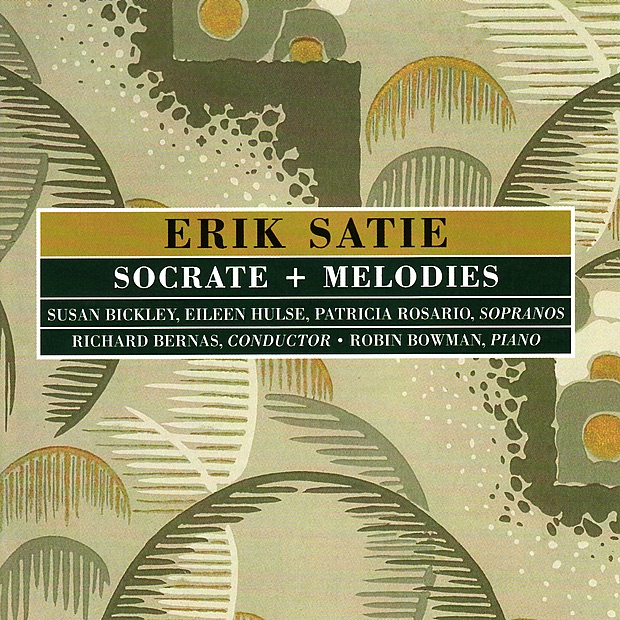
Works Info
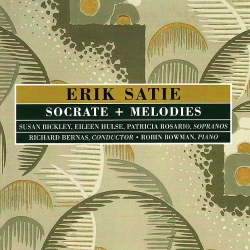
Composer:Erik SatieGenre:VocalStyle:Vocal MusicCompose Date:1886Average_duration:8:28Movement_count:3Movement ....Erik Satie's 'Mélodies (3) of 1886' is a collection of three songs composed for voice and piano. The exact date of composition is not known, but it is believed to have been written in 1886. The premiere of the work is also not documented, but it is likely that Satie performed the songs himself in small gatherings of friends and acquaintances. The three movements of the 'Mélodies (3) of 1886' are titled 'Elégie', 'Aubade', and 'Chanson'. Each movement is characterized by Satie's unique style, which is marked by simplicity, clarity, and a rejection of traditional harmonic and melodic structures. The first movement, 'Elégie', is a mournful song that features a simple, repetitive melody in the piano accompaniment. The vocal line is equally simple, with a limited range and a focus on the text. The lyrics, written by Satie himself, express a sense of loss and longing. The second movement, 'Aubade', is a cheerful and lively song that features a playful piano accompaniment and a vocal line that is full of energy and movement. The lyrics, also written by Satie, describe the joy of waking up to a new day and the promise of new adventures. The final movement, 'Chanson', is a romantic and sentimental song that features a flowing piano accompaniment and a vocal line that is full of emotion. The lyrics, written by the French poet Paul Bourget, express the pain of unrequited love and the longing for a lost lover. Overall, Satie's 'Mélodies (3) of 1886' is a beautiful and evocative work that showcases the composer's unique style and his ability to create powerful emotional effects with simple means. The work is a testament to Satie's importance as a pioneer of modern music and a master of musical expression.More....








Main Perform Artists
Piano
Soprano Vocal