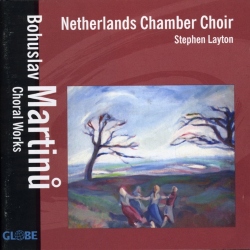
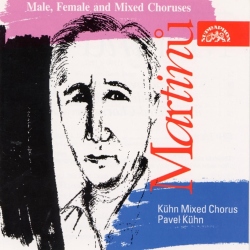
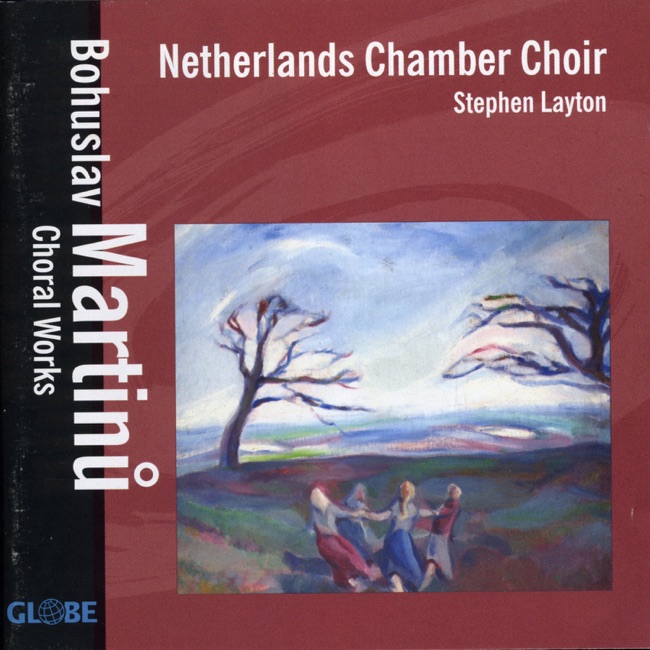
Bohuslav Martinu
Madrigals (4), H. 380
Released Album
Recent Album
Works Info
Composer:Bohuslav MartinuGenre:VocalStyle:MadrigalCompose Date:Mar 14, 1959 - Mar 20, 1959Publication Date:1960First Performance:Jun 15, 1959Average_duration:8:23Movement_count:4Movement ....Bohuslav Martinu's 'Madrigals (4), H. 380' is a set of four vocal pieces composed in 1947. The work was premiered in 1948 in Prague, Czechoslovakia. The four movements are titled "Píseň ptáka", "Zvony", "Květy na poli" and "Zpěv lesa". The first movement, "Píseň ptáka" (Song of the Bird), is a lively and playful piece that features a solo soprano voice accompanied by a piano. The vocal line is characterized by its wide range and virtuosic leaps, while the piano part provides a lively and rhythmic accompaniment. The second movement, "Zvony" (Bells), is a more contemplative piece that features a four-part choir. The vocal lines are characterized by their rich harmonies and use of dissonance, which creates a haunting and atmospheric effect. The text of the movement is a poem by the Czech poet František Halas, which describes the sound of church bells ringing in the distance. The third movement, "Květy na poli" (Flowers in the Field), is a solo soprano piece that is characterized by its lyrical and flowing vocal line. The piano accompaniment is delicate and understated, providing a gentle backdrop for the soprano's expressive singing. The text of the movement is a poem by the Czech poet Jaroslav Seifert, which describes the beauty of nature and the passing of time. The final movement, "Zpěv lesa" (Song of the Forest), is a four-part choir piece that is characterized by its rhythmic and energetic vocal lines. The text of the movement is a poem by the Czech poet Vítězslav Nezval, which describes the sounds of the forest and the animals that inhabit it. The vocal lines are accompanied by a lively and syncopated piano part, which adds to the overall sense of energy and movement in the piece. Overall, Martinu's 'Madrigals (4), H. 380' is a diverse and expressive work that showcases the composer's skill in writing for both solo voice and choir. The four movements are united by their use of Czech poetry as text and their exploration of themes related to nature and the passing of time.More....