


Mauricio Kagel
Released Album
Chamber
-
 December 10, 2021
 -
 February 3, 2017
 -
 September 9, 2014
 -
-
 February 11, 2014
 -
 February 1, 2013
Keyboard
-
 November 17, 2017
 -
 November 11, 2016
 -
 August 5, 2016
 -
 May 18, 1999
 -
-
Vocal
-
 November 9, 2018
 -
 October 28, 2016
 -
 November 27, 2006
 -
 September 24, 1993
Choral
-
 August 1, 2004
 -
 July 9, 2002
 -
-
 April 1, 1996
 -
 January 1, 1973
Artist Info
Role:Composer Conductor PerformerCountry: ArgentinaBirth:December 24, 1931 in Buenos Aires, ArgentinaDeath:September 18, 2008 in Cologne, GermanyPeriod:ContemporaryGenre:Avant-GardeChamberKeyboardOrchestralMauricio Kagel was a prominent Argentine-German composer, born on December 24, 1931, in Buenos Aires, Argentina. He was the son of Jewish immigrants who had fled from Eastern Europe to escape persecution. Kagel's father was a businessman, and his mother was a pianist who introduced him to music at an early age. Kagel's family moved to Montevideo, Uruguay, when he was six years old, and he began studying piano and composition with the composer and pianist César Franchisena. In 1957, Kagel moved to Cologne, Germany, to study with the composer Karlheinz Stockhausen at the Cologne Courses for New Music. He also studied with the composer and conductor Hermann Scherchen and the composer and pianist Mauricio Rosenmann. Kagel became a German citizen in 1960 and settled in Cologne, where he lived and worked for the rest of his life. Kagel's early works were influenced by the avant-garde movements of the 1950s and 1960s, including serialism, musique concrète, and aleatory music. His music often incorporated theatrical elements, such as spoken text, movement, and visual effects. Kagel was also interested in exploring the boundaries between different art forms, and he collaborated with artists from other disciplines, including theater, film, and visual art. One of Kagel's most famous works is "Staatstheater" (State Theater), a piece for orchestra and actors that was first performed in 1971. The piece is a satirical commentary on the role of the state in the arts, and it includes spoken text, singing, and instrumental music. The actors play the roles of politicians, bureaucrats, and artists, and they interact with the orchestra and the audience in a series of absurd and humorous scenes. Another notable work by Kagel is "Acustica" (Acoustics), a piece for four percussionists and tape that was first performed in 1970. The piece explores the possibilities of sound manipulation and spatialization, using a variety of percussion instruments and electronic effects. The tape part includes recordings of environmental sounds, such as traffic, birds, and water, which are processed and transformed into abstract textures and rhythms. Kagel's music often challenged the conventions of classical music and pushed the boundaries of what was considered acceptable in the concert hall. He was known for his irreverent humor and his willingness to experiment with new ideas and techniques. Kagel's work has had a significant influence on the development of contemporary music, and he is widely regarded as one of the most important composers of the 20th century. Kagel continued to compose and perform until his death on September 18, 2008, in Cologne, Germany. He left behind a legacy of innovative and groundbreaking music that continues to inspire and challenge musicians and audiences around the world.More....
Recent Artist Music
11
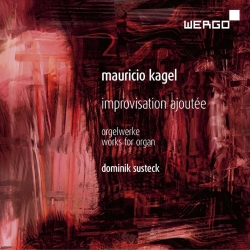
General Bass (No. 5 of "Program")
General Bass für kontinuierliche Instrumentalklänge (Nr. 5 aus Programm. Gesprächye mit Kammermusik)
8:27

Copyright Ⓒ 2013 Davinci Finger. All rights reseved
Service Terms & Policy