


New York Oratorio Society
Released Album
Artist Info
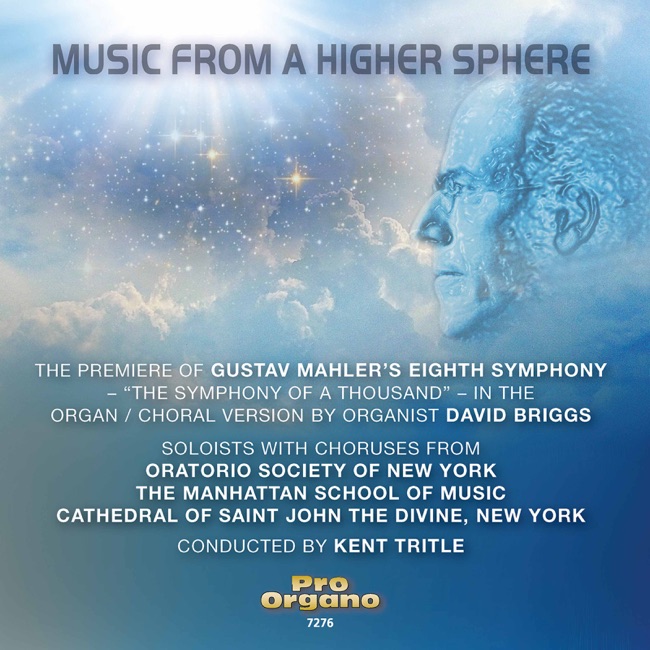
Role:EnsemblePeriod:BaroqueRomanticGenre:ChoralOperaThe New York Oratorio Society is a classical music organization that has been a staple of the New York City music scene for over 140 years. Founded in 1873 by Leopold Damrosch, the society has become one of the most respected and renowned choral groups in the world. Leopold Damrosch was a German conductor and composer who immigrated to the United States in 1871. He was determined to establish a choral society in New York City that would rival the great choral societies of Europe. With the help of a group of dedicated singers, he founded the Oratorio Society of New York in 1873. The society's first performance was Handel's "Messiah" at Steinway Hall in New York City on December 3, 1874. The performance was a great success, and the society quickly gained a reputation for excellence. Over the years, the society has performed a wide range of choral works, including Bach's "St. Matthew Passion," Beethoven's "Missa Solemnis," and Verdi's "Requiem." One of the highlights of the society's early years was its performance of Brahms' "Ein Deutsches Requiem" in 1877. The performance was conducted by Brahms himself, who was visiting the United States at the time. The society's performance was so impressive that Brahms reportedly said, "I have never heard my music so well sung." In 1884, Leopold Damrosch died suddenly, leaving the society without a conductor. His son, Walter Damrosch, took over as conductor and led the society for the next 37 years. Under Walter Damrosch's leadership, the society continued to grow and thrive. In 1903, the society performed the American premiere of Mahler's "Symphony No. 2," which was conducted by Mahler himself. The society's performances continued to draw large crowds, and in 1920, the society moved to Carnegie Hall, which became its permanent home. The society's performances at Carnegie Hall became legendary, and the society became known as one of the premier choral groups in the world. In 1945, the society appointed its first female conductor, Margaret Hillis. Hillis was a trailblazer in the male-dominated world of classical music, and she led the society for the next 10 years. Under her leadership, the society continued to perform at the highest level, and in 1950, the society performed the world premiere of Randall Thompson's "The Testament of Freedom." In the 1960s and 1970s, the society continued to perform a wide range of choral works, including works by contemporary composers such as Leonard Bernstein and John Adams. In 1974, the society celebrated its centennial with a performance of Beethoven's "Missa Solemnis" at Carnegie Hall. In the years since its centennial, the society has continued to perform at the highest level. In 1993, the society performed the world premiere of John Harbison's "The Great Gatsby," which was commissioned by the Metropolitan Opera. The society has also collaborated with a wide range of other organizations, including the New York Philharmonic and the Boston Symphony Orchestra. In addition to its performances, the society has also been recognized for its contributions to the world of classical music. In 1976, the society was awarded the National Medal of Arts by President Gerald Ford. The society has also been recognized by the American Society of Composers, Authors, and Publishers (ASCAP) for its commitment to contemporary music. Today, the New York Oratorio Society continues to be a vital part of the New York City music scene.More....
Recent Artist Music


Copyright Ⓒ 2013 Davinci Finger. All rights reseved
Service Terms & Policy