


Adolf Henselt
Released Album
Keyboard
-
 August 13, 2024
 -
 May 31, 2024
 -
 October 27, 2023
 -
 September 25, 2021
 -
 August 30, 2019
 -
 August 30, 2019
Concerto
-
 May 31, 2024
 -
-
-
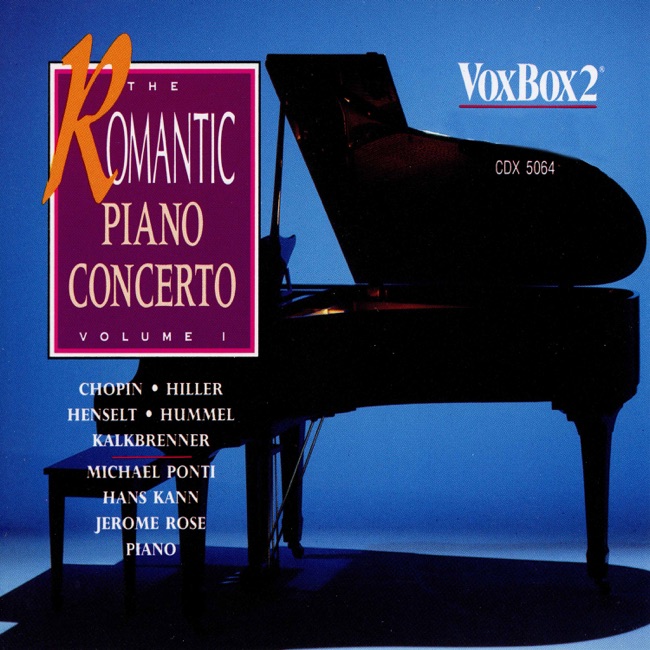 November 4, 1992
 -
 January 1, 1969
Vocal
-
 September 28, 2010
Artist Info
Role:ComposerCountry: GermanyBirth:May 9, 1814Death:October 10, 1889 in Warmbrunn, SilesiaPeriod:RomanticGenre:ConcertoKeyboardAdolf Henselt was a German composer and pianist who lived from 9 May 1814 to 10 October 1889. He was born in Schwabach, Bavaria, and showed an early aptitude for music. His father, a musician himself, recognized his son's talent and began teaching him the piano at a young age. Henselt's musical education continued under the tutelage of Johann Nepomuk Hummel, a renowned pianist and composer of the time. Henselt's early compositions were heavily influenced by Hummel's style, but he soon developed his own unique voice. He began performing in public at the age of 14 and quickly gained a reputation as a virtuoso pianist. In 1832, he moved to Vienna to study with Carl Czerny, another prominent pianist and composer. While in Vienna, Henselt became friends with Franz Liszt, who would later become one of his greatest supporters. Henselt's career as a composer began in earnest in the 1830s. His first published works were a set of variations for piano, which were well-received by critics. He continued to compose throughout the 1830s and 1840s, producing a number of works for piano, including sonatas, études, and nocturnes. His music was characterized by its technical virtuosity and its lyrical beauty. In 1843, Henselt was appointed court pianist to the Grand Duke of Weimar. This position gave him the opportunity to perform for and interact with some of the most important musicians of the time, including Liszt, Richard Wagner, and Hector Berlioz. Henselt's music was well-received by these musicians, and he became known as one of the leading pianists and composers of his generation. Henselt's most famous work is his Piano Concerto in F minor, which he composed in 1839. The concerto is a virtuosic tour-de-force for the piano, featuring complex technical passages and soaring melodies. It was premiered in Leipzig in 1846, with Henselt himself as the soloist. The concerto was an immediate success, and it has remained one of Henselt's most popular works to this day. In addition to his piano music, Henselt also composed a number of songs and chamber works. His songs are notable for their expressive melodies and sensitive settings of poetry. His chamber works, which include a piano trio and a string quartet, are characterized by their intricate counterpoint and rich harmonies. Despite his success as a composer and pianist, Henselt was plagued by health problems throughout his life. He suffered from a number of physical ailments, including rheumatism and neuralgia, which made it difficult for him to perform and compose. He also struggled with depression and anxiety, which further hindered his creative output. Henselt's health problems eventually forced him to retire from public performance in the 1860s. He spent the remainder of his life in obscurity, living in various cities throughout Europe. He continued to compose, but his output was limited by his declining health. He died in Warmbrunn, Silesia (now Poland), in 1889. Despite his relative obscurity today, Henselt was an important figure in the development of Romantic piano music. His technical virtuosity and lyrical beauty influenced a number of composers who came after him, including Sergei Rachmaninoff and Ferruccio Busoni. His Piano Concerto in F minor remains a staple of the piano repertoire, and his other works continue to be performed and recorded by pianists around the world.More....
Recent Artist Music

2
4:13
3
2:57
5
3:6
11
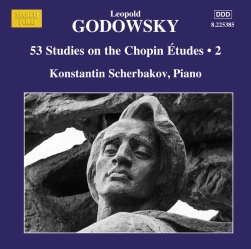
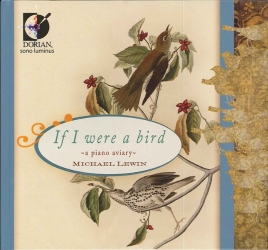
Characteristic Studies (12), No. 6, Were I a Bird, Op. 2/6
Douze 횋tudes cacaract챕ristiques, Op. 2 - No. 6 in F sharp major 'Si oiseau j'챕tais' (If I Were a Bird)
2:40
15
3:6
Copyright Ⓒ 2013 Davinci Finger. All rights reseved
Service Terms & Policy