


Plainchant
Released Album
Choral
-
 January 14, 2022
 -
 July 9, 2021
 -
 June 11, 2021
 -
 October 2, 2020
 -
 September 4, 2020
 -
 November 2, 2018
Vocal
-
 March 11, 2016
Miscellaneous
-
 April 5, 2004
Artist Info
Role:ComposerGenre:ChoralPlainchant, also known as Gregorian chant, is a form of medieval liturgical music that has been an integral part of the Catholic Church for centuries. Its origins can be traced back to the early Christian church, where it was used as a means of worship and prayer. The composer of Plainchant is not known, as it was a form of music that was passed down orally from generation to generation. The earliest known examples of Plainchant date back to the 9th century, and it was during this time that the music began to take on a more structured form. The melodies were based on a system of eight modes, which were used to create a sense of order and harmony within the music. The use of these modes allowed for a greater degree of complexity in the music, and it was during this time that Plainchant began to evolve into the form that we know today. One of the most significant developments in the history of Plainchant occurred in the 11th century, when the music was standardized by the Catholic Church. This was done in order to ensure that the music was consistent across different regions and that it could be used in a variety of liturgical settings. The standardization of Plainchant led to the creation of a vast repertoire of music, which was used in churches throughout Europe. One of the most famous composers of Plainchant was Hildegard von Bingen, a German abbess who lived in the 12th century. Hildegard was a prolific composer, and her music was known for its haunting melodies and intricate harmonies. Her most famous work is the Ordo Virtutum, a morality play that tells the story of the struggle between the virtues and the devil. Another important composer of Plainchant was Guido of Arezzo, an Italian monk who lived in the 11th century. Guido is credited with the invention of the musical staff, which allowed for a greater degree of precision in the notation of music. He also developed a system of solmization, which used syllables to represent different notes in the music. This system, which is still used today, allowed for a greater degree of accuracy in the teaching and learning of music. One of the most famous pieces of Plainchant is the Dies Irae, a hymn that is traditionally sung at funerals. The hymn, which dates back to the 13th century, is known for its powerful melody and its depiction of the Day of Judgment. The Dies Irae has been used in a variety of musical settings, including in the Requiem Masses of Mozart, Verdi, and Brahms. Plainchant continued to be an important part of the Catholic Church throughout the Middle Ages and the Renaissance. However, with the advent of the Protestant Reformation in the 16th century, the use of Plainchant began to decline. Protestant churches favored a simpler form of music, and many of the elaborate melodies and harmonies of Plainchant were deemed too complex for congregational singing. Despite this decline, Plainchant continued to be an important part of the Catholic Church, and it was during the 20th century that the music experienced a revival. This revival was led by a group of scholars and musicians who were interested in the historical performance of the music. They studied the original manuscripts and used this knowledge to create performances that were as close to the original as possible. Today, Plainchant continues to be an important part of the Catholic Church, and it is also performed in concert halls and other venues around the world.More....
Recent Artist Music
1
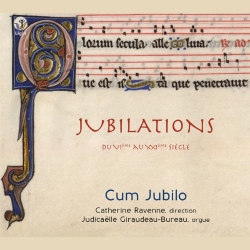
Victimae Pashali Lauds
Vicitime Paschali laudes: séquence / conduit à 2 voix Codex de Las Huelgas
1:58
6
2:1

15
Per omnia saecula saeculorum ... Vere dignum et justum est
Preface: Per omnia saecula - Vere dignum - Quia per incarnati
2:30
Copyright Ⓒ 2013 Davinci Finger. All rights reseved
Service Terms & Policy