


John Bull
Released Album
Keyboard
-
 November 10, 2023
 -
 October 14, 2022
 -
 February 11, 2022
 -
 December 3, 2021
 -
 October 1, 2021
 -
 September 3, 2021
Orchestral
-
 December 1, 2009
Chamber
-
 January 13, 2015
 -
 January 10, 1997
 -
 March 6, 1995
Miscellaneous
Artist Info
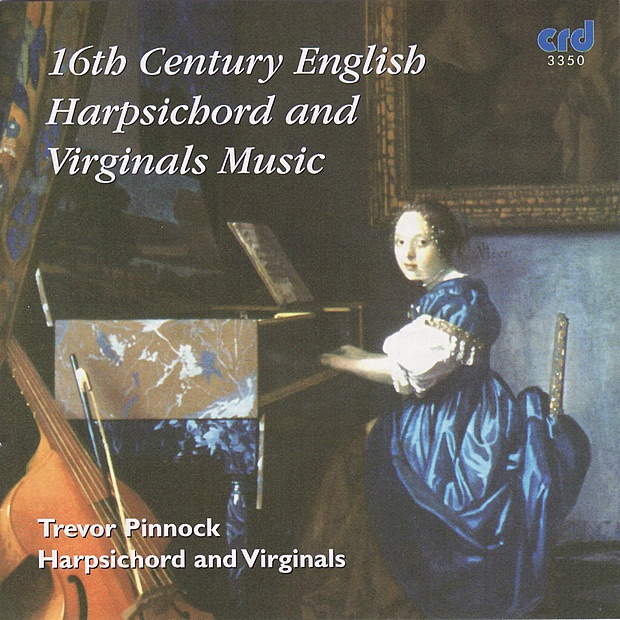
Role:Composer PerformerCountry: United KingdomBirth:ca. 1562 in Old Radnor, Radnorshire, EnglandDeath:March 12, 1628 in Antwerp, BelgiumPeriod:RenaissanceGenre:KeyboardOrchestralJohn Bull was a renowned English composer and keyboard player who lived during the Renaissance period. He was born in 1562 in Somerset, England, to a family of musicians. His father, John Bull Sr., was a musician and a member of the Chapel Royal, while his mother, Mary Bull, was a singer. John Bull was the youngest of their children, and he showed an early interest in music. At the age of seven, John Bull was sent to the choir school of Hereford Cathedral, where he received his early musical education. He was a talented student and quickly became proficient in playing the organ and other keyboard instruments. In 1573, at the age of eleven, he was appointed as an organist at Hereford Cathedral, making him one of the youngest organists in England at the time. In 1578, John Bull was awarded a scholarship to study at Oxford University, where he studied music and other subjects. He continued to excel in his musical studies and was appointed as the organist at the Chapel Royal in 1582. This was a prestigious position, and it gave him the opportunity to perform for Queen Elizabeth I and other members of the royal court. During his time at the Chapel Royal, John Bull composed many works for the keyboard, including preludes, fantasias, and dances. He was known for his virtuosic playing and his ability to improvise on the keyboard. His music was highly regarded by his contemporaries, and he was considered one of the leading composers of his time. In 1591, John Bull left England and traveled to the continent, where he spent several years in the service of various European courts. He worked as a musician for the Duke of Brunswick in Germany, the Archduke Ferdinand in Austria, and the King of Denmark. During his travels, he met many other musicians and composers, including Jan Pieterszoon Sweelinck, who was a major influence on his music. While in Europe, John Bull continued to compose music for the keyboard, as well as vocal music and instrumental music. He also wrote music for the lute, which was a popular instrument at the time. His music was highly regarded by his European contemporaries, and he was considered one of the leading composers of his time. In 1599, John Bull returned to England and was appointed as the organist at the Chapel Royal once again. He continued to compose music for the keyboard, as well as vocal music and instrumental music. He also worked as a music teacher, and many of his students went on to become successful musicians in their own right. One of John Bull's most famous works is his set of variations on the popular tune "Walsingham." This work, which is known as the "Walsingham Variations," is considered one of the greatest works for the keyboard from the Renaissance period. It consists of nine variations on the tune, each of which showcases John Bull's virtuosic playing and his ability to create complex and intricate musical textures. Another famous work by John Bull is his "In Nomine" for keyboard. This work is based on a popular chant melody, and it features intricate counterpoint and complex harmonies. It is considered one of the greatest works for the keyboard from the Renaissance period. John Bull died in 1628, and he was buried in the Chapel Royal at St. Peter ad Vincula in the Tower of London. His music continued to be performed and admired long after his death, and he is considered one of the greatest composers of the Renaissance period.More....
Recent Artist Music



14
4:42



Copyright Ⓒ 2013 Davinci Finger. All rights reseved
Service Terms & Policy