


Salvatore Sciarrino
Released Album
Chamber
-
 March 12, 2021
 -
 August 28, 2020
 -
 May 1, 2020
 -
 July 19, 2019
 -
 March 1, 2019
 -
 November 2, 2018
Keyboard
-
 December 11, 2020
 -
-
 August 5, 2016
 -
 October 18, 2013
 -
 August 11, 2009
 -
 April 25, 2006
Vocal
-
 June 16, 2017
 -
-
 April 10, 2012
 -
 September 13, 2011
 -
 November 14, 2006
 -
 May 10, 2005
Orchestral
-
 January 13, 2009
 -
 January 1, 1997
Artist Info
Role:Composer ConductorCountry: ItalyBirth:April 4, 1947 in Palermo, Sicily, ItalyPeriod:ContemporaryGenre:ChamberKeyboardSalvatore Sciarrino is a renowned Italian composer of contemporary classical music. Born on April 4, 1947, in Palermo, Sicily, Sciarrino grew up in a family of musicians. His father was a violinist, and his mother was a pianist. As a child, Sciarrino showed a keen interest in music and began studying the flute at the age of 12. Sciarrino's early musical education was at the Conservatory of Palermo, where he studied flute, composition, and conducting. He later continued his studies at the Accademia Nazionale di Santa Cecilia in Rome, where he studied composition with Franco Donatoni. Sciarrino's early works were heavily influenced by the avant-garde movement of the 1960s and 1970s. His music was characterized by its use of extended techniques, such as multiphonics and microtones, and its exploration of unconventional soundscapes. One of Sciarrino's early works, "Canzona di ringraziamento," was written in 1972 and is a prime example of his early style. The piece is scored for flute, clarinet, violin, cello, and piano and features a series of fragmented melodies and dissonant harmonies. In the 1980s, Sciarrino's music began to evolve, and he started to incorporate more traditional elements into his compositions. His works from this period are characterized by their use of tonality and their exploration of the timbral possibilities of acoustic instruments. One of Sciarrino's most famous works from this period is "Infinito nero," which was written in 1988. The piece is scored for flute, clarinet, violin, cello, and piano and features a series of haunting melodies and ethereal harmonies. In the 1990s, Sciarrino's music continued to evolve, and he began to incorporate more experimental elements into his compositions. His works from this period are characterized by their use of extended techniques and their exploration of unconventional soundscapes. One of Sciarrino's most famous works from this period is "Lohengrin," which was written in 1998. The piece is scored for soprano, flute, clarinet, violin, cello, and piano and features a series of fragmented melodies and dissonant harmonies. In the 2000s, Sciarrino's music continued to evolve, and he began to incorporate more electronic elements into his compositions. His works from this period are characterized by their use of electronic soundscapes and their exploration of the boundaries between acoustic and electronic music. One of Sciarrino's most famous works from this period is "La bocca, i piedi, il suono," which was written in 2002. The piece is scored for soprano, flute, clarinet, violin, cello, and electronics and features a series of haunting melodies and ethereal harmonies. Throughout his career, Sciarrino has received numerous awards and accolades for his contributions to contemporary classical music. In 2003, he was awarded the prestigious Prince Pierre of Monaco Prize for his contributions to contemporary music. In 2011, he was awarded the Golden Lion for Lifetime Achievement at the Venice Biennale. Today, Salvatore Sciarrino is considered one of the most important composers of contemporary classical music. His works continue to be performed and recorded by some of the world's leading orchestras and ensembles, and his influence on the world of classical music is undeniable.More....
Recent Artist Music
5
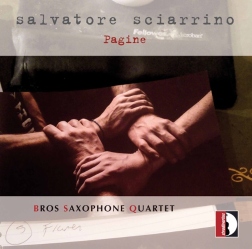
The voci sottovetro: Tu m'uccidi, o crudele after Carlo, Gesualdo
Tu m' uccidi, o crudele (Libro V dei Madrigali)
3:5
7
Melodies (2) for voice & piano
II. Occhi stellanti (in: Poesie varie, a cura di B. Croce, Bari, 1913)
3:30
8
4:26
13
10:
15
1:58
Copyright Ⓒ 2013 Davinci Finger. All rights reseved
Service Terms & Policy