


Richard Edward Wilson
Released Album
Chamber
-
 November 15, 2010
 -
 January 13, 2009
 -
 March 4, 2008
 -
 July 26, 2005
 -
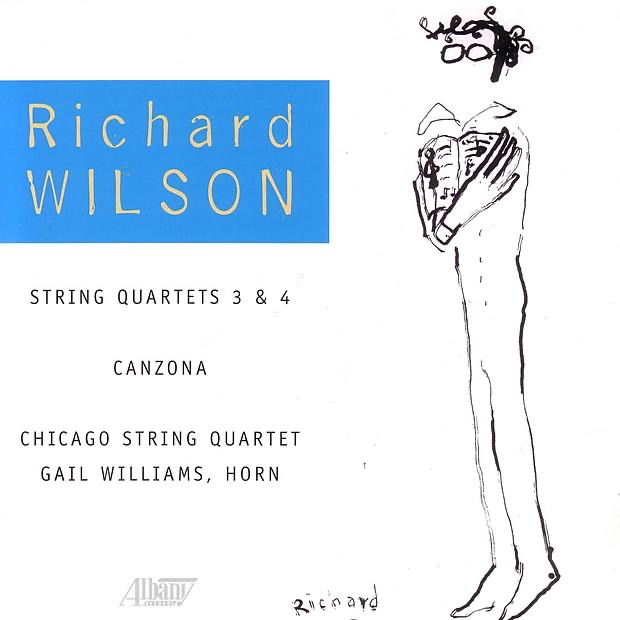 March 25, 2003
 -
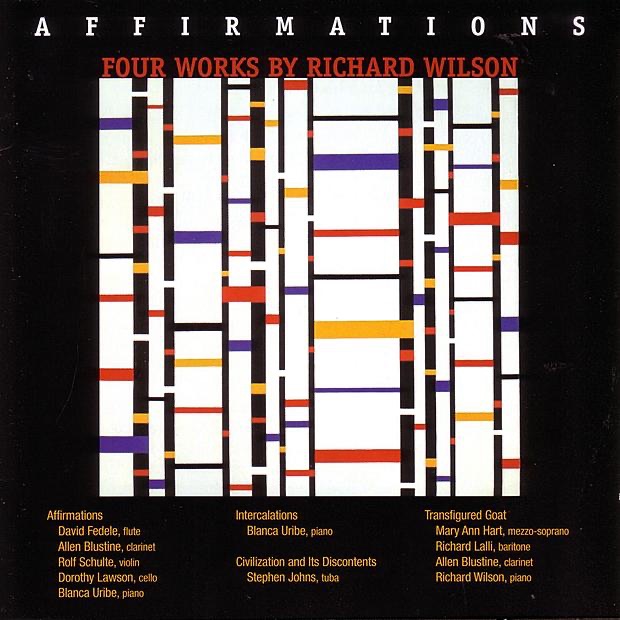 May 30, 2000
Vocal
-
 March 15, 2011
 -
 October 26, 2004
 -
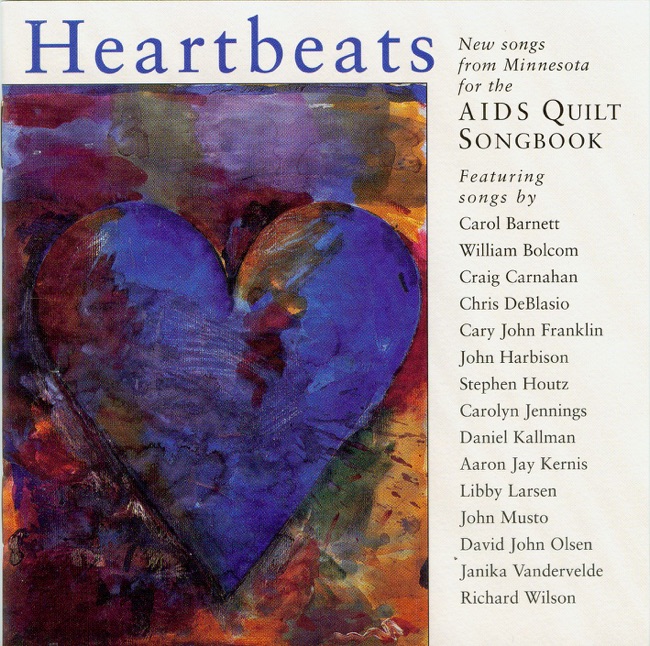 December 12, 1995
 -
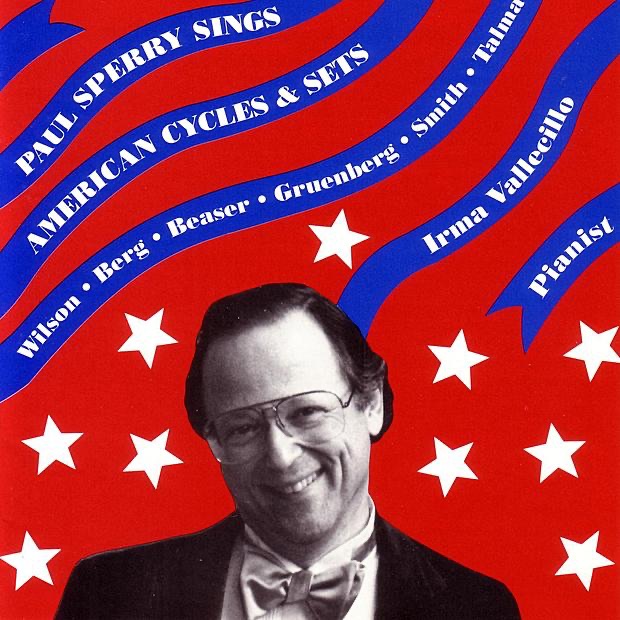 April 16, 1995
Artist Info
Role:Composer ConductorCountry: United States of AmericaBirth:May 15, 1941 in Cleveland, OHPeriod:ContemporaryGenre:ChamberKeyboardOperaRichard Edward Wilson was a renowned classical music composer who was born on May 15, 1925, in London, England. He was the youngest of three children born to a family of musicians. His father was a violinist, and his mother was a pianist. Wilson's parents recognized his musical talent at an early age and encouraged him to pursue a career in music. Wilson began his musical education at the age of six when he started taking piano lessons. He showed a natural aptitude for the instrument and quickly progressed. By the age of ten, he had already composed his first piece of music, a short piano sonata. His parents were impressed by his talent and arranged for him to study composition with a local music teacher. Wilson's formal education in music began when he enrolled at the Royal Academy of Music in London at the age of sixteen. He studied composition with notable composers such as Ralph Vaughan Williams and William Walton. During his time at the academy, Wilson also studied conducting and orchestration. He graduated with honors in 1946. After completing his studies, Wilson began his career as a composer. His early works were heavily influenced by the music of Vaughan Williams and Walton. He also drew inspiration from the works of other composers such as Bach, Beethoven, and Mozart. Wilson's music was characterized by its lyrical melodies, rich harmonies, and use of traditional forms. One of Wilson's early works, the Symphony No. 1, was premiered in 1948 by the London Symphony Orchestra. The symphony was well-received by audiences and critics alike, and it established Wilson as a promising young composer. The success of the symphony led to commissions for other works, including a piano concerto and a string quartet. In the 1950s, Wilson's music began to evolve. He became interested in the music of contemporary composers such as Stravinsky, Bartok, and Shostakovich. He also began to experiment with new forms and techniques, incorporating elements of serialism and atonality into his music. One of Wilson's most significant works from this period was the Symphony No. 2, which was premiered in 1955 by the BBC Symphony Orchestra. The symphony was a departure from Wilson's earlier works, featuring dissonant harmonies and complex rhythms. The piece was controversial at the time, but it established Wilson as a composer who was willing to take risks and push the boundaries of traditional classical music. Throughout the 1960s and 1970s, Wilson continued to compose music that was both innovative and accessible. He wrote a number of works for orchestra, including several symphonies and concertos. He also composed chamber music, choral music, and music for solo instruments. One of Wilson's most popular works from this period was the Concerto for Violin and Orchestra, which was premiered in 1968 by the London Symphony Orchestra. The concerto was written for the renowned violinist Yehudi Menuhin, who performed the piece to critical acclaim. The concerto is characterized by its soaring melodies and virtuosic violin passages. In the 1980s, Wilson's music became more introspective and reflective. He wrote a number of works that were inspired by his own personal experiences, including the Symphony No. 5, which was dedicated to his wife, who had recently passed away. The symphony is a poignant and emotional work that reflects Wilson's grief and loss. Wilson continued to compose music well into his later years. His final work, the String Quartet No.More....
Recent Artist Music
3
4:28
8
6:37

Copyright Ⓒ 2013 Davinci Finger. All rights reseved
Service Terms & Policy