


Herbert Witherspoon
Released Album
Opera
Artist Info
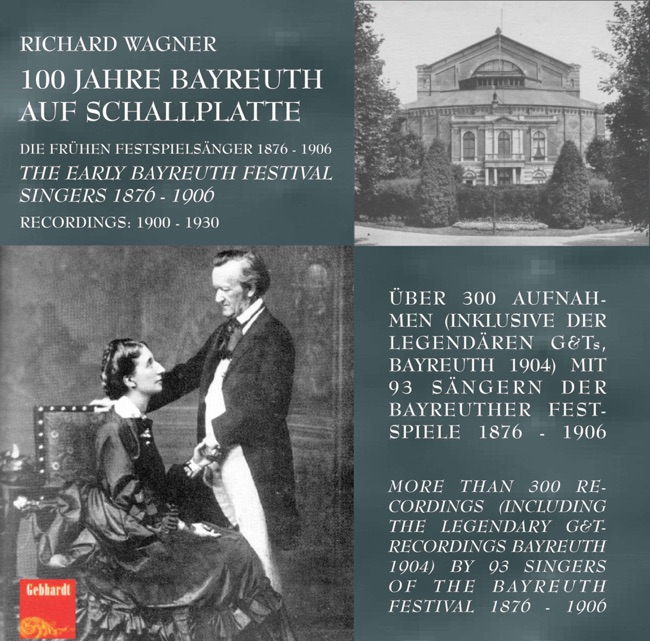
Role:PerformerPeriod:BaroqueRomanticGenre:OperaHerbert Witherspoon was a renowned classical music artist who made a significant contribution to the world of opera and vocal music. Born on March 10, 1873, in Buffalo, New York, Witherspoon was the son of a Baptist minister. He grew up in a musical family and showed an early interest in music. Witherspoon's father recognized his son's talent and encouraged him to pursue a career in music. Witherspoon began his musical training at the age of 16 when he joined the choir of his father's church. He later studied at the Buffalo Conservatory of Music, where he received vocal training from George Sweet and piano lessons from William H. Sherwood. Witherspoon's talent was evident from an early age, and he quickly became known for his powerful and expressive voice. In 1895, Witherspoon made his professional debut as a soloist with the Buffalo Philharmonic Orchestra. He then moved to New York City, where he continued his vocal training with the renowned teacher, Manuel Garcia. Witherspoon's career took off, and he soon became a sought-after performer in the United States and Europe. Witherspoon's breakthrough came in 1903 when he was invited to perform at the Metropolitan Opera in New York City. He made his debut as the High Priest in Verdi's Aida, and his performance was widely praised. Witherspoon went on to perform in many other operas at the Metropolitan Opera, including Wagner's Ring Cycle, Verdi's Otello, and Puccini's La Bohème. Witherspoon's success at the Metropolitan Opera led to many other opportunities. He performed with the Boston Symphony Orchestra, the Chicago Symphony Orchestra, and the Philadelphia Orchestra, among others. Witherspoon was also a frequent performer at the Salzburg Festival in Austria, where he performed in many operas and concerts. Witherspoon was known for his powerful and expressive voice, which he used to great effect in his performances. He was particularly renowned for his performances of Wagner's music, which he approached with great passion and intensity. Witherspoon's performances were characterized by his rich, resonant voice, his impeccable technique, and his ability to convey the emotional depth of the music. Witherspoon was also a respected teacher and mentor. He taught at the Curtis Institute of Music in Philadelphia and the Juilliard School in New York City. Witherspoon's students included many of the leading singers of the day, including Marian Anderson, Paul Robeson, and Lawrence Tibbett. Witherspoon's career was not without its challenges. He faced discrimination and racism throughout his life, both as a black man and as a performer. Despite these obstacles, Witherspoon remained committed to his art and continued to perform and teach until his death in 1935. Witherspoon's legacy lives on through his recordings, which continue to be admired for their technical excellence and emotional depth. His influence can also be seen in the many singers he taught and mentored, who went on to become some of the most celebrated performers of the 20th century. In recognition of his contributions to the world of music, Witherspoon was posthumously inducted into the American Classical Music Hall of Fame in 2003. His legacy as a performer, teacher, and mentor continues to inspire generations of musicians and music lovers around the world.More....
Copyright Ⓒ 2013 Davinci Finger. All rights reseved
Service Terms & Policy