


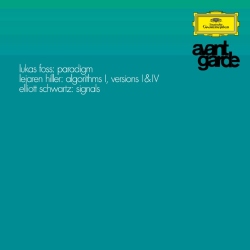
Lejaren Hiller
Released Album
Chamber
-
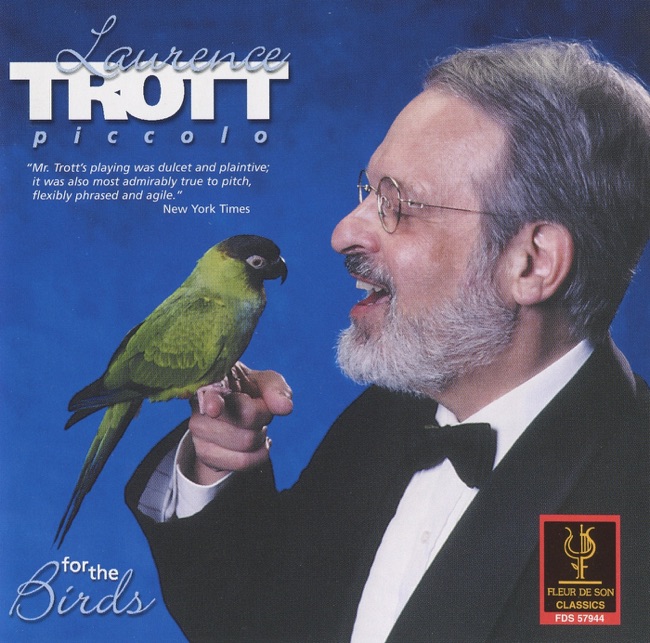 June 26, 2001
 -
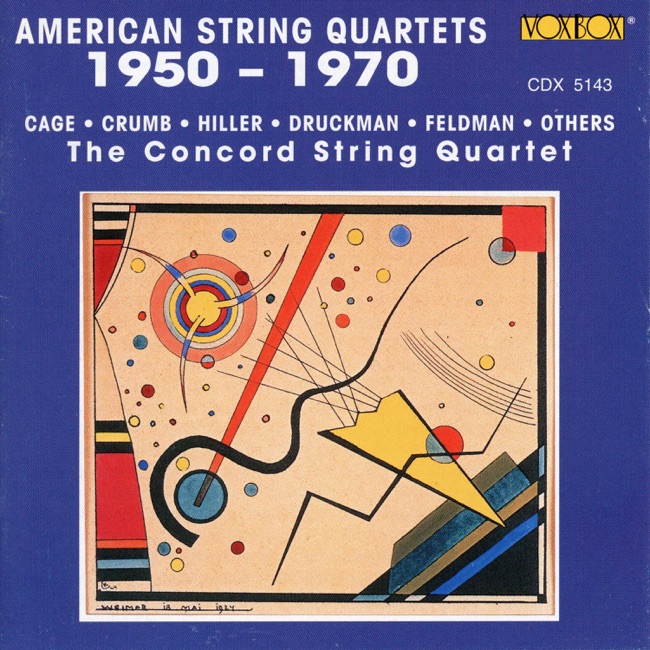 September 26, 1995
Vocal
-
 August 12, 2008
Artist Info
Role:ComposerCountry: United States of AmericaBirth:February 23, 1924 in New York City, NYDeath:January 26, 1994 in Buffalo, NYGenre:Avant-GardeChamberKeyboardLejaren Hiller was an American composer who was born on February 23, 1924, in New York City. He was the son of Russian-Jewish immigrants and grew up in a musical family. His father was a violinist, and his mother was a pianist. Hiller started playing the piano at a young age and showed a great interest in music. Hiller attended the University of Michigan, where he studied composition with Ross Lee Finney and received his Bachelor of Music degree in 1943. He then went on to study at the University of California, Berkeley, where he earned his Master of Arts degree in 1948. During his time at Berkeley, Hiller studied with composers such as Ernest Bloch, Roger Sessions, and Arnold Schoenberg. In 1954, Hiller became a professor of music at the University of Illinois at Urbana-Champaign, where he remained until his retirement in 1992. During his time at the university, he founded the Experimental Music Studio, which became a leading center for electronic music research and composition. Hiller was a pioneer in the field of computer music. In 1957, he collaborated with mathematician Leonard Isaacson to create the Illiac Suite, which was the first piece of music to be composed by a computer. The Illiac Suite was composed using an IBM 704 computer, and it consisted of four movements that were based on mathematical algorithms. Hiller continued to explore the possibilities of computer music throughout his career. In 1964, he collaborated with John Cage to create HPSCHD, which was a multimedia work that combined live harpsichord music with computer-generated sounds. The piece was performed at the University of Illinois and was a groundbreaking work in the field of computer music. In addition to his work in computer music, Hiller was also a prolific composer of traditional classical music. He composed works for orchestra, chamber ensembles, and solo instruments. Some of his most notable works include the String Quartet No. 5, the Concerto for Violin and Orchestra, and the Sonata for Violin and Piano. Hiller's music was often characterized by its complexity and experimentation. He was interested in exploring new sounds and techniques, and his compositions often incorporated elements of chance and improvisation. His music was also influenced by his interest in mathematics and science, and he often used mathematical algorithms and computer-generated sounds in his compositions. Despite his groundbreaking work in the field of computer music, Hiller's music was not always well-received by critics and audiences. Some critics found his music to be too complex and difficult to understand, while others criticized his use of electronic and computer-generated sounds. Despite these criticisms, Hiller remained committed to his experimental approach to music composition. He continued to explore new sounds and techniques throughout his career, and his work had a significant impact on the development of computer music and experimental music in the 20th century. Lejaren Hiller passed away on January 26, 1994, in Buffalo, New York. He left behind a legacy of groundbreaking work in the field of computer music and experimental music, and his contributions to the world of classical music continue to be celebrated and studied today.More....
Recent Artist Music
1
1:20

Copyright Ⓒ 2013 Davinci Finger. All rights reseved
Service Terms & Policy