


John Tilbury
Released Album
Keyboard
-
-
 May 7, 2002
 -
-
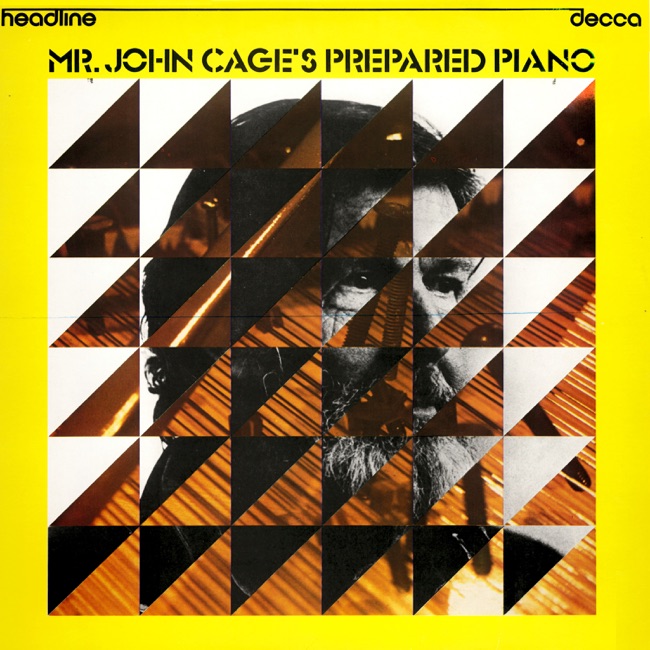 July 11, 1976
Chamber
Artist Info
Role:ComposerGenre:KeyboardJohn Tilbury is a renowned classical music artist who has made significant contributions to the world of contemporary music. Born on February 1, 1936, in Walthamstow, London, Tilbury grew up in a family that was passionate about music. His father was a jazz pianist, and his mother was a singer, which exposed him to music from an early age. Tilbury began his musical journey by learning the piano at the age of five. He was a gifted student and quickly progressed to more advanced pieces. He studied at the Royal College of Music in London, where he was awarded the prestigious Hopkinson Gold Medal for piano performance. After completing his studies, Tilbury embarked on a career as a concert pianist, performing extensively throughout Europe and the United States. Tilbury's early career was marked by his interest in contemporary music. He was particularly drawn to the works of John Cage, Morton Feldman, and Cornelius Cardew, and he became a leading interpreter of their music. He also collaborated with many other contemporary composers, including Christian Wolff, Howard Skempton, and Michael Parsons. One of Tilbury's most significant contributions to contemporary music was his work with the Scratch Orchestra, a collective of musicians and artists founded by Cardew in 1969. The Scratch Orchestra was known for its experimental approach to music-making, and Tilbury was a key member of the group. He played an important role in the development of the group's improvisational techniques and helped to create many of its most memorable performances. In addition to his work with the Scratch Orchestra, Tilbury also collaborated with many other musicians and artists throughout his career. He was a member of the influential improvisation group AMM, which included Keith Rowe and Eddie Prévost, and he worked with the dancer and choreographer Carolyn Carlson on several projects. He also collaborated with the filmmaker Peter Gidal on a number of experimental films. Tilbury's career was marked by many highlights, including his performances of Feldman's epic work "For Philip Guston." This piece, which lasts over four hours, is considered one of the most significant works of contemporary music of the 20th century, and Tilbury's performances of it are widely regarded as definitive. He also performed many other works by Feldman, including "Triadic Memories" and "Piano and String Quartet." Tilbury's work with Cardew was also significant, and he played an important role in the development of Cardew's political and musical philosophy. He performed many of Cardew's works, including "The Great Learning" and "Treatise," and he was a key member of the Scratch Orchestra, which was founded to explore Cardew's ideas about music and society. In addition to his work as a performer, Tilbury was also a respected teacher and writer. He taught at the Dartington College of Arts and the University of Huddersfield, and he wrote extensively about contemporary music. His book "Cornelius Cardew: A Life Unfinished" is considered one of the most important works on the composer, and his essays and articles have been published in many journals and magazines. Tilbury's contributions to contemporary music have been recognized with many awards and honors. He was awarded the prestigious Paul Hamlyn Foundation Award for Artists in 2012, and he was made an Officer of the Order of the British Empire (OBE) in 2016 for his services to music.More....


Copyright Ⓒ 2013 Davinci Finger. All rights reseved
Service Terms & Policy