


Hans Kotter
Released Album
Keyboard
-
 March 4, 2022
 -
 September 25, 2012
 -
-
 May 27, 2008
 -
 December 8, 1992
Choral
-
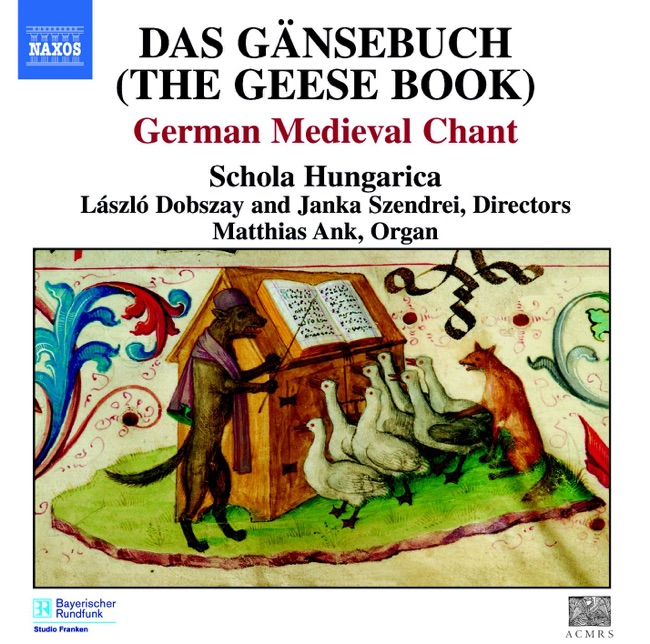 June 21, 2005
Artist Info
Role:ComposerCountry: GermanyBirth:1485 in Strasbourg, FranceDeath:1541 in Bern, SwitzerlandPeriod:RenaissanceGenre:KeyboardHans Kotter was a German composer who lived from 1908 to 1977. He was born in the city of Munich, where he spent most of his life. Kotter was born into a family of musicians, and his father was a well-known conductor in the city. From a young age, Kotter showed a great interest in music, and he began studying the piano and violin at the age of six. Kotter's musical education continued throughout his childhood and adolescence. He studied at the Munich Conservatory, where he received a thorough grounding in music theory and composition. He also studied with some of the leading composers of the day, including Paul Hindemith and Arnold Schoenberg. Kotter's early compositions were heavily influenced by the music of the Second Viennese School, a group of composers who were known for their atonal and dissonant music. However, Kotter soon began to develop his own style, which was characterized by a more tonal and melodic approach. One of Kotter's early works was his Piano Sonata No. 1, which he composed in 1932. The piece is notable for its use of complex rhythms and harmonies, as well as its virtuosic piano writing. The sonata was well-received by audiences and critics alike, and it helped to establish Kotter as a rising star in the world of classical music. Throughout the 1930s, Kotter continued to compose a wide range of works, including chamber music, orchestral pieces, and vocal music. One of his most famous works from this period is his Symphony No. 1, which he composed in 1936. The symphony is a large-scale work that features a wide range of musical ideas and textures. It is notable for its use of lush harmonies and sweeping melodies, as well as its complex orchestration. During World War II, Kotter's career was interrupted by his service in the German army. However, he continued to compose during this time, and he even wrote a number of patriotic songs and marches for the military. After the war, Kotter returned to Munich and resumed his career as a composer. In the post-war years, Kotter's music began to evolve in new directions. He became interested in incorporating elements of folk music and jazz into his compositions, and he also began to experiment with electronic music. One of his most famous works from this period is his Concerto for Jazz Band and Orchestra, which he composed in 1954. The piece is a fusion of classical and jazz music, and it features a virtuosic jazz band alongside a full symphony orchestra. Kotter's later works continued to explore new musical ideas and techniques. He wrote a number of pieces for electronic instruments, including his Electronic Symphony, which he composed in 1967. He also continued to write vocal music, including his opera The Trial, which he composed in 1972. Throughout his career, Kotter was known for his innovative approach to composition. He was not afraid to experiment with new musical ideas and techniques, and he was always looking for new ways to push the boundaries of classical music. His music was characterized by its lush harmonies, complex rhythms, and sweeping melodies, and it continues to be performed and admired by audiences around the world.More....
Recent Artist Music
2
1:17
6
12:36
8
2:51

Copyright Ⓒ 2013 Davinci Finger. All rights reseved
Service Terms & Policy