


Louis-Claude Daquin
Released Album
Keyboard
-
 May 24, 2024
 -
 March 31, 2024
 -
 February 24, 2023
 -
 October 22, 2022
 -
 October 14, 2022
 -
 October 7, 2022
Artist Info
Role:ComposerCountry: FranceBirth:July 4, 1694 in Paris, FranceDeath:June 15, 1772 in Paris, FrancePeriod:BaroqueGenre:ChamberKeyboardLouis-Claude Daquin was a French composer and organist who lived during the Baroque period. He was born on July 4, 1694, in Paris, France, to a family of musicians. His father, Claude Daquin, was a harpsichordist and organist, and his mother, Anne Tiersant, was a singer. Louis-Claude Daquin showed an early interest in music and began studying the harpsichord and organ at a young age. Daquin's musical education was extensive. He studied with some of the most prominent musicians of his time, including Louis Marchand, André Raison, and Jean-Philippe Rameau. He also studied composition with François Couperin, who was a close friend of his father. Daquin's talent as a musician was evident from an early age. He made his public debut as an organist at the age of six, and by the time he was a teenager, he was already a well-known performer in Paris. In 1712, he was appointed as the organist at the Church of Sainte-Madeleine in Paris, a position he held for the rest of his life. Daquin's compositions were highly regarded during his lifetime. He was known for his skillful use of counterpoint and his ability to create complex and intricate musical textures. His music was also notable for its elegance and refinement, which reflected the tastes of the French aristocracy. One of Daquin's most famous works is his set of harpsichord pieces, "The Cuckoo." This work, which was published in 1735, is a set of variations on a simple theme that imitates the call of a cuckoo. The variations are highly inventive and showcase Daquin's skill as a composer. "The Cuckoo" remains one of Daquin's most popular works and is still frequently performed today. Another notable work by Daquin is his "Noël X," which is a set of variations on the Christmas carol "Il est né le divin enfant." This work, which was also written for the harpsichord, is a virtuosic display of Daquin's skill as a composer and performer. The variations range from simple and elegant to complex and ornate, and the work as a whole is a testament to Daquin's mastery of the harpsichord. In addition to his compositions for the harpsichord, Daquin also wrote music for the organ. His organ music is notable for its use of complex counterpoint and its intricate textures. One of his most famous organ works is his "Noël VIII," which is a set of variations on the Christmas carol "D'ou viens-tu, bergère?" This work, like "Noël X," is a virtuosic display of Daquin's skill as a composer and performer. Daquin's music was highly influential during his lifetime and continues to be admired today. His elegant and refined style was a major influence on the French Baroque style, and his use of counterpoint and intricate textures was an important precursor to the music of the Classical period. Daquin died on June 15, 1772, in Paris, France. He was remembered as one of the greatest musicians of his time and his music continues to be admired and performed today.More....
Recent Artist Music
1
3:45
2
L'hirondelle in D major/D minor (Pieces for harpsichord, Suite No. 2)
L'Hirondelle - Gayement (Deuxième Suite de Pièces de Clavecin)
3:14
3
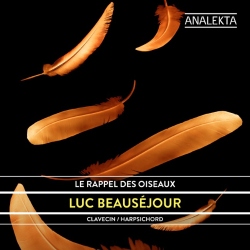
3:12
4
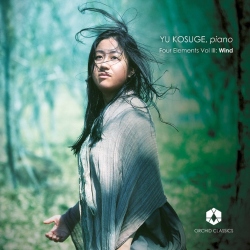
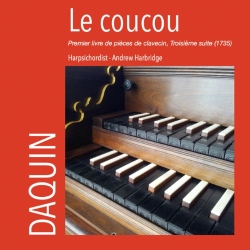
Le Coucou in E minor (Pieces for harpsichord, Suite No. 3)
Premier livre de pièces de clavecin: Le coucou
2:26
6
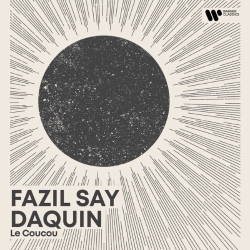
Le Coucou in E minor (Pieces for harpsichord, Suite No. 3)
Le Coucou (Premier Livre de pièces de clavecin, Troisième Suite No. 1)
1:53
7
The Pleasures of the Hunt in C major (Harpsichord Pieces)
L'appel des Chasseurs - Fanfare en Rondeau
1:29
9
1:46
10
1:59
11
1:55
12
2:57

15
Le Coucou in E minor (Pieces for harpsichord, Suite No. 3)
Premier livre de pièces de clavecin, Troisième suite - I. Le coucou
1:55
Works Highlight
Recommend Playlist








Copyright Ⓒ 2013 Davinci Finger. All rights reseved
Service Terms & Policy