


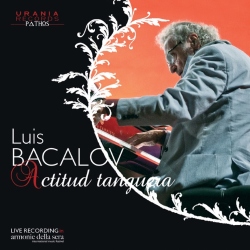
Luis Bacalov
Released Album
Chamber
-
 February 3, 2017
 -
 July 29, 2016
 -
 February 4, 2009
Artist Info
Role:Composer ConductorCountry: ArgentinaBirth:March 30, 1933 in Buenos Aires, ArgentinaLuis Bacalov was a renowned Argentine-Italian composer, pianist, and conductor who made significant contributions to the world of classical music. He was born on August 30, 1933, in Buenos Aires, Argentina, to a family of musicians. His father was a violinist, and his mother was a pianist, which exposed him to music at an early age. Bacalov began his musical training at the age of six, studying piano with Vincenzo Scaramuzza, a renowned Argentine pianist. He later studied composition with Alberto Ginastera, one of the most prominent Argentine composers of the 20th century. Bacalov's early works were influenced by the Argentine folk music and tango, which he later incorporated into his classical compositions. In 1953, Bacalov moved to Italy to continue his studies at the Accademia Nazionale di Santa Cecilia in Rome. He studied composition with Goffredo Petrassi, a prominent Italian composer, and piano with Carlo Zecchi, a renowned Italian pianist. Bacalov's time in Italy was a turning point in his career, as he began to incorporate Italian opera and classical music into his compositions. Bacalov's first major success came in 1966 when he composed the score for the Italian film "Django," directed by Sergio Corbucci. The film's theme song, "Django," became an instant hit and was later covered by numerous artists, including the legendary jazz guitarist, Wes Montgomery. Bacalov's success with "Django" led to numerous collaborations with Italian filmmakers, including Federico Fellini, Pier Paolo Pasolini, and Lina Wertmüller. In 1971, Bacalov composed the score for the Italian film "Il Postino," directed by Michael Radford. The film's score won Bacalov an Academy Award for Best Original Dramatic Score in 1996, despite the film being released in 1994. The score for "Il Postino" is considered one of Bacalov's most significant works, as it showcases his ability to blend classical music with traditional Italian folk music. Bacalov's other notable works include the score for the Italian film "La Città Delle Donne" (1980), directed by Federico Fellini, and the opera "Il Processo" (1984), based on Franz Kafka's novel "The Trial." Bacalov's opera was well-received by critics and audiences alike, and it showcased his ability to compose for the human voice. Bacalov's music was characterized by his ability to blend different musical styles, including classical, folk, and jazz. His compositions were often described as cinematic, as they were heavily influenced by his work in film. Bacalov's music was also known for its emotional depth and ability to evoke a wide range of emotions in listeners. In addition to his work as a composer, Bacalov was also a respected conductor and pianist. He conducted numerous orchestras around the world, including the London Symphony Orchestra, the Royal Philharmonic Orchestra, and the Orchestra dell'Accademia Nazionale di Santa Cecilia. Bacalov was also a prolific pianist, and he often performed his own compositions in concert. Bacalov's contributions to the world of classical music were recognized with numerous awards and honors. In addition to his Academy Award, he received the Silver Ribbon for Best Score from the Italian National Syndicate of Film Journalists in 1966, 1971, and 1980. He was also awarded the Order of Merit of the Italian Republic in 2002 for his contributions to Italian culture. Bacalov passed away on November 15, 2017, in Rome, Italy, at the age of 84.More....
Recent Artist Music
6
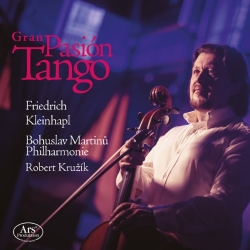
Building the Bullet (from the film 'Assassination Tango')
Building the Bullet (from "Assassination Tango")
1:38
9
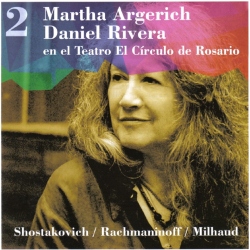
Luis Bacalov
Astoreando, para Dos Pianos
5:20
10
16:23
Copyright Ⓒ 2013 Davinci Finger. All rights reseved
Service Terms & Policy