


William Boyce
Released Album
Symphony
-
 December 6, 2021
 -
 November 18, 2021
 -
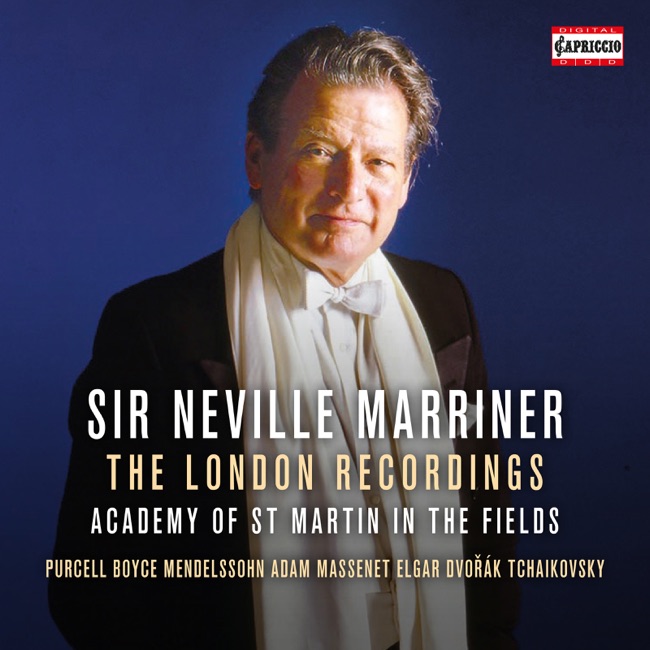 August 10, 2018
 -
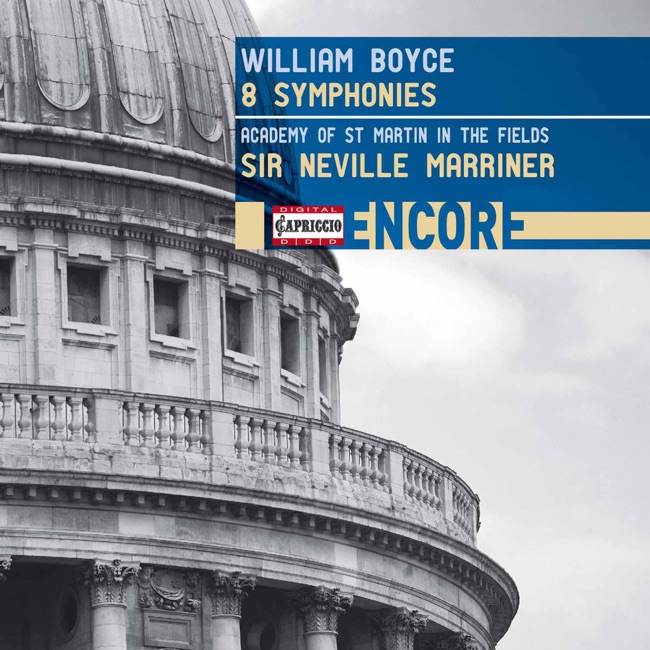 January 6, 2017
 -
 October 28, 2014
Choral
-
-
 June 3, 2022
 -
 January 26, 2018
 -
 June 10, 2016
 -
 May 5, 2015
 -
 April 5, 2011
Chamber
-
 August 31, 2010
 -
 August 1, 2010
 -
 September 21, 1999
 -
 December 13, 1990
Vocal
-
 September 1, 2017
 -
-
 June 30, 2008
 -
 July 24, 2007
 -
 June 3, 2003
 -
Artist Info
Role:ComposerCountry: United KingdomBirth:September 11, 1711 in London, EnglandDeath:February 7, 1779 in London, EnglandPeriod:ClassicalGenre:ChamberChoralSymphonyWilliam Boyce was a prominent English composer of the Baroque era, known for his contributions to the development of English music. He was born on September 11, 1711, in London, England, to a family of musicians. His father, William Boyce Sr., was a musician and choir director at St. Paul's Cathedral, and his mother, Elizabeth Cordwell, was a singer. Boyce showed an early interest in music and began his musical education at a young age. He was a chorister at St. Paul's Cathedral, where he received training in singing and music theory. He also studied the organ and harpsichord with John Blow, a prominent composer and organist of the time. In 1734, Boyce was appointed as the organist at the Oxford Chapel in London. He held this position for several years, during which he composed a number of works for the church, including anthems, hymns, and cantatas. In 1736, he was also appointed as the composer of music for the Chapel Royal, a prestigious position that he held for the rest of his life. Boyce's early works were heavily influenced by the Baroque style of music, which was popular in England at the time. His compositions were characterized by their use of counterpoint, complex harmonies, and intricate melodies. He was also known for his skillful use of the organ and harpsichord, which he often incorporated into his works. One of Boyce's most famous works is his Symphony No. 1 in B-flat major, which was composed in 1749. This symphony is notable for its use of the trumpet, which was a relatively new instrument at the time. The piece is also known for its lively and energetic melodies, which showcase Boyce's skill as a composer. Another notable work by Boyce is his Ode for St. Cecilia's Day, which was composed in 1739. This piece was written to celebrate the patron saint of music, and it features a number of soloists, a choir, and an orchestra. The piece is notable for its use of complex harmonies and intricate melodies, which showcase Boyce's skill as a composer. In addition to his work as a composer, Boyce was also a respected musicologist and music historian. He was a member of the Royal Society of Musicians, and he wrote a number of books and articles on music theory and history. He was also a strong advocate for the development of English music, and he worked to promote the works of English composers both at home and abroad. Boyce died on February 7, 1779, in London, England. He was buried in the crypt of St. Paul's Cathedral, where his father had served as a choir director. His legacy as a composer and musicologist continues to be celebrated today, and his works are still performed and studied by musicians around the world.More....
Recent Artist Music
2
2:57

4
2:1
5
1:4
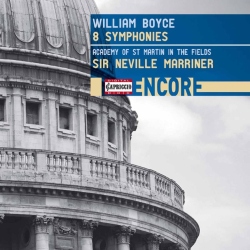
Works Highlight
Recommend Playlist



Related Artists
Copyright Ⓒ 2013 Davinci Finger. All rights reseved
Service Terms & Policy