


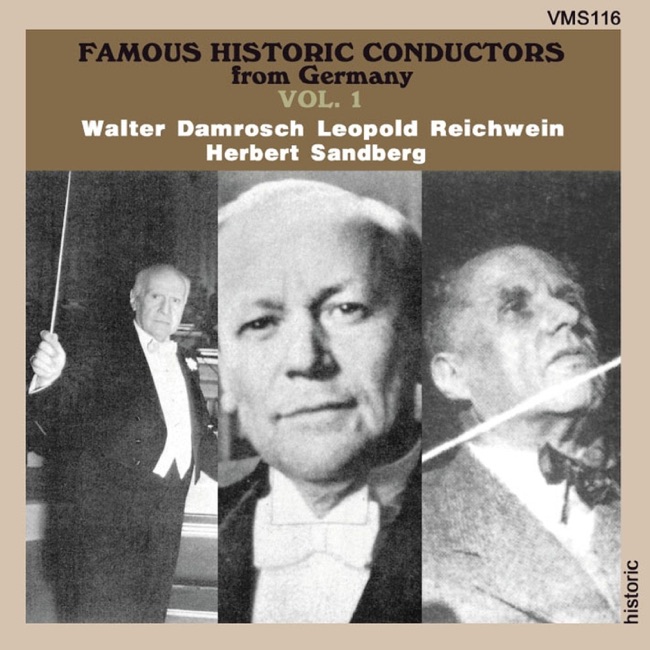
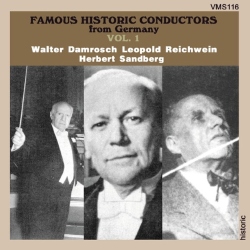
Walter Damrosch
Released Album
Vocal
-
 May 20, 1997
Opera
Keyboard
-
 October 6, 2017
 -
 October 1, 2013
Artist Info
Role:Composer ConductorBirth:January 30, 1862 in Breslau, GermanyDeath:December 22, 1950 in New York City, NYPeriod:ContemporaryGenre:OperaOrchestralSymphonyVocalWalter Damrosch was a prominent American conductor and composer of classical music in the late 19th and early 20th centuries. He was born on January 30, 1862, in Breslau, Germany (now Wrocław, Poland), to a musical family. His father, Leopold Damrosch, was a conductor and composer, and his mother, Helene von Heimburg, was a singer. Walter Damrosch grew up in a household filled with music, and he began studying piano and violin at a young age. In 1871, the Damrosch family immigrated to the United States, settling in New York City. Walter Damrosch continued his musical education, studying piano with Rafael Joseffy and violin with Henry Schradieck. He also studied composition with Gustav Dannreuther and Antonín Dvořák. In 1884, Walter Damrosch made his conducting debut with the New York Symphony Orchestra, which had been founded by his father. He quickly established himself as a talented conductor, and in 1894, he became the conductor of the Metropolitan Opera in New York City. He held this position for 15 years, during which time he conducted many of the great operas of the repertoire. In addition to his work as a conductor, Walter Damrosch was also a prolific composer. He wrote a number of operas, including "The Scarlet Letter" (1896), "Cyrano de Bergerac" (1913), and "The Man Without a Country" (1937). He also composed orchestral works, choral music, and chamber music. One of Walter Damrosch's most famous compositions is his "Cyrano de Bergerac" overture. This work is based on the play by Edmond Rostand, and it captures the swashbuckling spirit of the story. The overture features a memorable trumpet fanfare and a lively, dance-like theme. Another notable work by Walter Damrosch is his "American Flag" march. This patriotic piece was written in 1898, during the Spanish-American War, and it features a stirring melody that evokes the spirit of American patriotism. Walter Damrosch was also a champion of contemporary music, and he conducted many premieres of works by American composers. He was particularly supportive of the music of Charles Ives, and he conducted the premiere of Ives' "Three Places in New England" in 1931. Throughout his career, Walter Damrosch was a tireless advocate for classical music. He believed that music was an essential part of human culture, and he worked to bring it to as many people as possible. He was a frequent lecturer and writer on music, and he was instrumental in the founding of the New York Institute of Musical Art (now the Juilliard School) in 1905. Walter Damrosch died on December 22, 1950, at the age of 88. He left behind a legacy of great music and a commitment to the advancement of classical music in America. His contributions to the world of music continue to be felt today, and his work as a conductor, composer, and educator has inspired generations of musicians.More....
Recent Artist Music
1
4:1
3
3:59
5
5:12
6
Tristan and Isolde
Act II: nur heute, heut'! Die Fackel dort losche nicht! - Isolde! Geliebte! - Tristan! Geliebter
1:52
Copyright Ⓒ 2013 Davinci Finger. All rights reseved
Service Terms & Policy