


Giuseppe Sammartini
Sonata for flute & continuo in A minor, Op. 2/6
Released Album
Recent Album
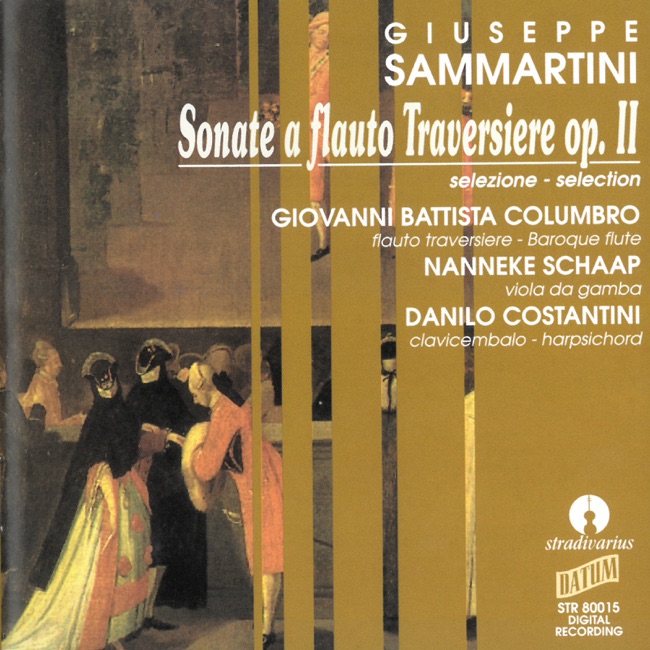
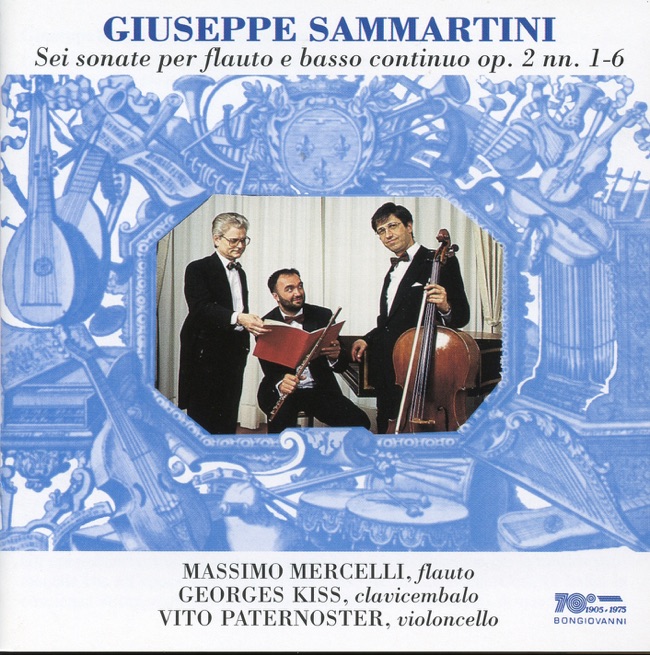
Works Info
Composer:Giuseppe SammartiniAverage_duration:9:47The 'Sonata for flute & continuo in A minor, Op. 2/6' is a Baroque composition by Italian composer Giuseppe Sammartini. It was composed in the early 18th century and premiered in London, England. The sonata consists of three movements: an opening Grave, a lively Allegro, and a concluding Affettuoso. The first movement, Grave, is a slow and solemn introduction that sets the mood for the entire piece. It features a simple melody played by the flute, accompanied by the continuo. The second movement, Allegro, is a fast and lively dance-like section that showcases the virtuosity of the flute. The flute and continuo engage in a lively dialogue, with the flute taking the lead in most of the exchanges. The final movement, Affettuoso, is a slow and expressive section that brings the sonata to a gentle close. The flute and continuo play together in a beautiful and harmonious duet. The 'Sonata for flute & continuo in A minor, Op. 2/6' is a prime example of Baroque music. It features the typical Baroque characteristics of ornamentation, counterpoint, and a basso continuo accompaniment. The flute is the primary instrument, and it is given ample opportunity to showcase its technical abilities. The continuo, which typically consists of a harpsichord and a cello, provides a steady and supportive foundation for the flute. Overall, the 'Sonata for flute & continuo in A minor, Op. 2/6' is a beautiful and expressive piece of music that showcases the talents of both the composer and the performer. It is a testament to the enduring popularity of Baroque music and continues to be performed and enjoyed by audiences around the world.More....
Works Music
Released Music
2
Sonata for flute & continuo in A minor, Op. 2/6
Sonata sesta in la minore: Adagio ma non tanto
1:56