Arthur Honegger
Sonata for violin & piano No. 1 in C sharp minor, H. 17
Released Album
Recent Album
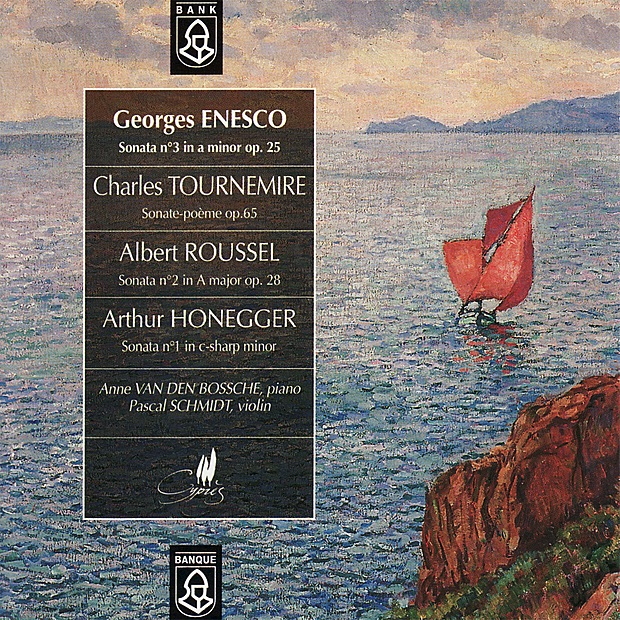
Works Info
Composer:Arthur HoneggerGenre:ChamberStyle:Chamber MusicCompose Date:1916 - 1918Publication Date:1921Average_duration:20:17Arthur Honegger's Sonata for violin and piano No. 1 in C sharp minor, H. 17, was composed in 1919 and premiered on January 21, 1920, in Paris. The sonata consists of three movements: The first movement, marked "Lento - Allegro con fuoco," begins with a slow and mysterious introduction in the piano, followed by a passionate and intense violin melody. The movement is characterized by its use of dissonant harmonies and abrupt changes in tempo and dynamics. The middle section features a lyrical and expressive violin solo, which is later joined by the piano in a dramatic and virtuosic passage. The movement ends with a fiery and energetic coda. The second movement, marked "Andante," is a serene and contemplative interlude. The violin and piano engage in a delicate and intimate dialogue, with the violin playing a lyrical and expressive melody over a gentle and flowing piano accompaniment. The movement is characterized by its use of rich harmonies and subtle shifts in mood and texture. The third movement, marked "Allegro molto," is a lively and energetic finale. The violin and piano engage in a playful and virtuosic dialogue, with both instruments displaying their technical prowess in a series of rapid and intricate passages. The movement is characterized by its use of syncopated rhythms and lively dance-like melodies, which build to a thrilling and triumphant conclusion. Overall, Honegger's Sonata for violin and piano No. 1 in C sharp minor is a powerful and expressive work, characterized by its use of dissonant harmonies, abrupt changes in tempo and dynamics, and virtuosic passages for both instruments. The sonata showcases Honegger's unique style, which blends elements of French impressionism with the rhythmic and harmonic complexity of modernism.More....
Works Music
Released Music