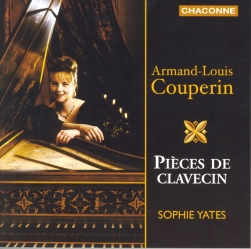
Armand-Louis Couperin
Pièces de Clavecin
Released Album
Recent Album
Featured Album
Works Info
Composer:Armand-Louis CouperinGenre:KeyboardStyle:KeyboardCompose Date:1751Armand-Louis Couperin was a French Baroque composer and harpsichordist who lived from 1727 to 1789. He was a member of the famous Couperin family of musicians, which included his uncle François Couperin, known as "Couperin le Grand." Armand-Louis Couperin is best known for his collection of harpsichord pieces called "Pièces de Clavecin," which he composed in 1746. "Pièces de Clavecin" consists of four suites, each containing several movements. The first suite is in G major and includes an allemande, courante, sarabande, gavotte, menuet, and gigue. The second suite is in D major and includes an allemande, courante, sarabande, menuet, and gigue. The third suite is in C minor and includes an allemande, courante, sarabande, menuet, and gigue. The fourth suite is in B-flat major and includes an allemande, courante, sarabande, menuet, and gigue. The "Pièces de Clavecin" are characterized by their elegance, grace, and refinement. They are typical of the French Baroque style, with their use of ornamentation, dance rhythms, and binary form. The pieces are also notable for their use of chromaticism, which was a relatively new technique at the time. The chromaticism adds a sense of tension and drama to the music, which is balanced by the overall sense of poise and control. The "Pièces de Clavecin" were premiered in 1746, and they quickly became popular among harpsichordists and music lovers. They were published in 1747 and were reprinted several times in the following years. The collection is still considered a masterpiece of the French Baroque repertoire and is frequently performed and recorded today. In conclusion, Armand-Louis Couperin's "Pièces de Clavecin" is a collection of harpsichord pieces that consists of four suites, each containing several movements. The pieces are characterized by their elegance, grace, and refinement, as well as their use of ornamentation, dance rhythms, and chromaticism. The collection premiered in 1746 and quickly became popular, and it is still considered a masterpiece of the French Baroque repertoire today.More....
Works Music
Released Music
Featured Music