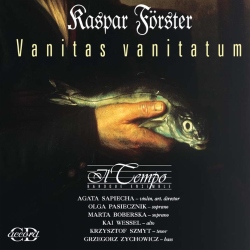
Kaspar Förster
Vanitas vanitatum, KBPJ 46
Released Album
Recent Album

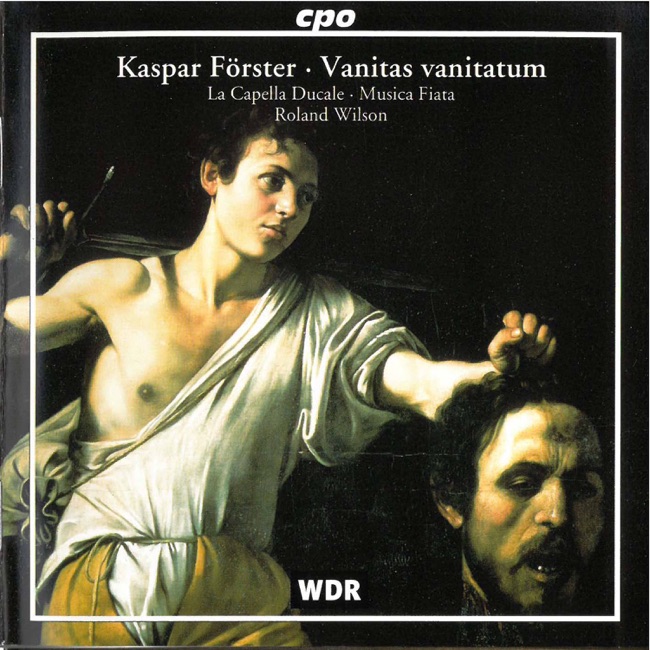
Works Info
Composer:Kaspar FörsterGenre:VocalStyle:Vocal MusicAverage_duration:10:25Vanitas vanitatum, KBPJ 46 is a Baroque cantata composed by Kaspar Förster. The cantata was composed in the early 18th century and premiered in 1701 in Dresden, Germany. The cantata is divided into six movements and is written for a solo soprano, two violins, viola, and basso continuo. The first movement, "Vanitas vanitatum," is a recitative that sets the tone for the entire cantata. The text is taken from Ecclesiastes and speaks of the vanity of life and the inevitability of death. The music is somber and reflective, with the soprano singing in a declamatory style. The second movement, "Aria: Ach, wie flüchtig, ach wie nichtig," is a lament that continues the theme of the first movement. The soprano sings of the fleeting nature of life and the inevitability of death. The music is slow and mournful, with the violins and viola providing a mournful accompaniment. The third movement, "Recitative: Doch, o Schrecken," is a recitative that speaks of the fear of death and the unknown. The soprano sings in a dramatic style, with the music becoming more intense and urgent as the text progresses. The fourth movement, "Aria: Ach, wie bald, ach wie geschwinde," is a lively and energetic aria that speaks of the swiftness of life and the need to enjoy it while it lasts. The music is upbeat and joyful, with the soprano singing in a more playful and lighthearted style. The fifth movement, "Recitative: Doch, o selige Gedanken," is a recitative that speaks of the comfort that can be found in faith and the hope of eternal life. The soprano sings in a more hopeful and optimistic style, with the music becoming more serene and peaceful. The final movement, "Aria: Ach, wie bald, ach wie geschwinde," is a reprise of the fourth movement, but with a more reflective and somber tone. The soprano sings of the fleeting nature of life and the inevitability of death, but with a sense of acceptance and resignation. The music is slow and mournful, with the violins and viola providing a mournful accompaniment. Overall, Vanitas vanitatum, KBPJ 46 is a powerful and moving cantata that speaks to the transience of life and the inevitability of death. The music is somber and reflective, but also joyful and hopeful, reflecting the complex emotions that come with contemplating mortality.More....
Works Music