Thea Musgrave
Trio for flute, oboe & piano
Released Album
Recent Album
Featured Album
Works Info
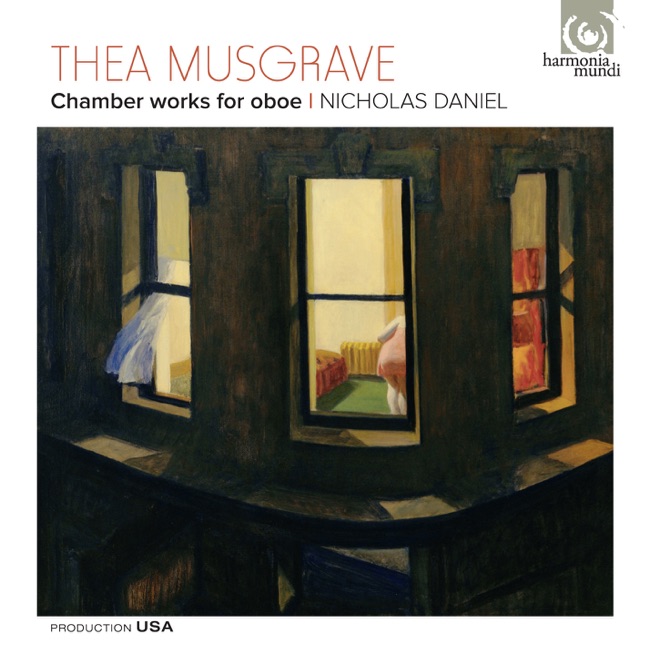
Composer:Thea MusgraveGenre:ChamberCompose Date:1960Average_duration:9:43The Trio for flute, oboe & piano is a chamber music composition by the Scottish-American composer Thea Musgrave. It was composed in 1971 and premiered on May 4, 1972, at the Wigmore Hall in London, by the London Sinfonietta members William Bennett (flute), Janet Craxton (oboe), and John Constable (piano). The Trio is divided into three movements, each with its own character and mood. The first movement, marked "Allegro con brio," is a lively and energetic piece that showcases the virtuosity of the performers. The flute and oboe engage in a playful dialogue, while the piano provides a rhythmic and harmonic foundation. The second movement, marked "Lento," is a slow and introspective piece that explores the expressive capabilities of the instruments. The flute and oboe play long, lyrical lines, while the piano provides a delicate accompaniment. The movement builds to a climax before subsiding into a quiet and contemplative coda. The final movement, marked "Vivace," is a fast and lively piece that brings the Trio to a thrilling conclusion. The flute and oboe engage in a frenzied dance, while the piano provides a driving rhythmic pulse. The movement features intricate interplay between the instruments and culminates in a virtuosic coda. The Trio for flute, oboe & piano is characterized by Musgrave's distinctive style, which combines elements of modernism with a lyrical and expressive sensibility. The piece showcases her skillful handling of instrumental textures and her ability to create a sense of drama and narrative within a chamber music setting. The Trio has become a staple of the chamber music repertoire and is widely regarded as one of Musgrave's most accomplished works.More....
Works Music
Released Music
Featured Music