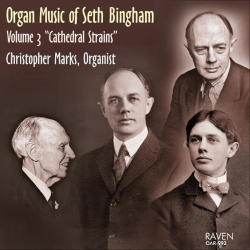
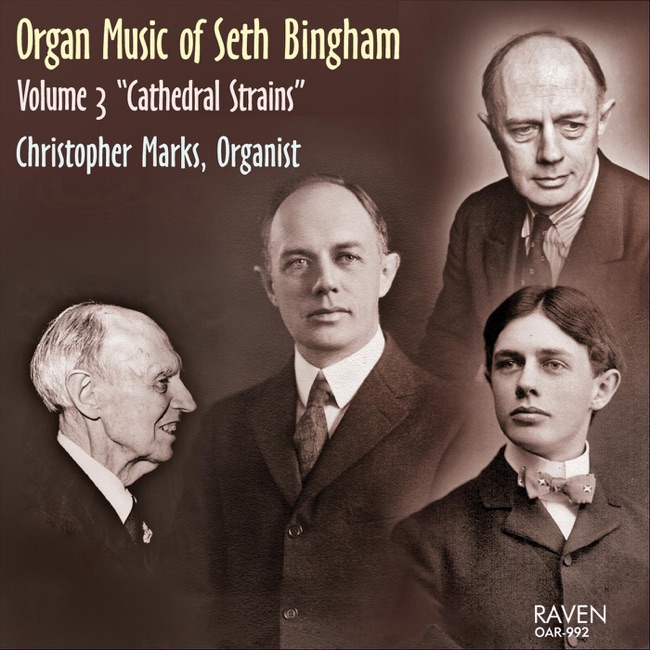
Seth Bingham
Passacaglia, Op. 40
Released Album
Recent Album
Works Info
Composer:Seth BinghamGenre:KeyboardStyle:KeyboardPassacaglia, Op. 40 is a composition for organ by American composer Seth Bingham. It was composed in 1938 and premiered on March 6, 1939, at the Cathedral of St. John the Divine in New York City. The piece is divided into three movements and has a total duration of approximately 12 minutes. The first movement of Passacaglia, Op. 40 is marked "Moderato" and is based on a repeating bass line, or passacaglia, that is heard throughout the entire piece. The melody is introduced in the upper registers of the organ and gradually builds in intensity as the movement progresses. The harmonies are rich and complex, with dissonant chords adding to the overall sense of tension and drama. The second movement, marked "Adagio," is a stark contrast to the first. It is a slow, contemplative piece that features a simple melody in the upper registers of the organ. The harmonies are more consonant than in the first movement, and the overall mood is one of introspection and reflection. The final movement, marked "Allegro," is a lively and energetic piece that brings the work to a thrilling conclusion. The passacaglia bass line is still present, but it is now accompanied by a fast-moving melody in the upper registers of the organ. The harmonies are once again complex and dissonant, and the overall effect is one of excitement and exhilaration. Passacaglia, Op. 40 is a challenging work for organists, requiring both technical skill and a deep understanding of the complex harmonies and structures of the piece. It is considered one of Bingham's most important works and has become a staple of the organ repertoire.More....
Works Music