Edmund Rubbra
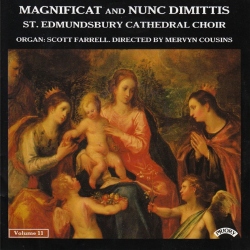
Magnificat and Nunc Dimittis in A flat, Op. 65
Released Album
Recent Album
Featured Album
Works Info
Composer:Edmund RubbraGenre:ChoralStyle:MagnificatAverage_duration:6:33Movement_count:2Movement ....Edmund Rubbra's 'Magnificat and Nunc Dimittis in A flat, Op. 65' is a choral work that was composed in 1956. It was premiered on 22nd November 1956 at St. John's College, Cambridge, by the choir of St. John's College, conducted by George Guest. The work is divided into two movements, the Magnificat and the Nunc Dimittis, which are based on the texts from the Gospel of Luke. The Magnificat is a hymn of praise that Mary sings after she is visited by the angel Gabriel and told that she will give birth to Jesus. Rubbra's setting of the Magnificat is characterized by its use of rich harmonies and intricate counterpoint. The opening section is sung by the choir in unison, with the organ providing a gentle accompaniment. The choir then divides into four parts, with each part singing a different melody that weaves in and out of the texture. The music builds to a climax with the words "He hath put down the mighty from their seat," before subsiding into a quiet and reflective section for the final lines. The Nunc Dimittis is a hymn of thanksgiving that is traditionally sung at the end of the day. Rubbra's setting of the Nunc Dimittis is more subdued than the Magnificat, with a simpler harmonic language and a more homophonic texture. The opening section is sung by the choir in unison, with the organ providing a gentle accompaniment. The choir then divides into four parts, with each part singing a different melody that is more closely related to the others than in the Magnificat. The music builds to a climax with the words "To be a light to lighten the Gentiles," before subsiding into a quiet and reflective section for the final lines. Overall, Rubbra's 'Magnificat and Nunc Dimittis in A flat, Op. 65' is a beautiful and expressive choral work that showcases his skill as a composer. The rich harmonies and intricate counterpoint of the Magnificat are balanced by the simpler and more homophonic texture of the Nunc Dimittis, creating a work that is both varied and cohesive. The work has become a staple of the choral repertoire and is frequently performed in churches and concert halls around the world.More....
Works Music
Released Music

Featured Music