Frédéric Chopin
Introduction in C minor and Rondo in E flat major, Op. 16
Released Album
Recent Album
-
-

-

-
-

-

-
-
 Sofia AndreoliSeptember 17, 2021
 -
-
-
-
Featured Album

Works Info
Composer:Frédéric ChopinGenre:KeyboardStyle:RondoCompose Date:1832Publication Date:1833Average_duration:10:10Frédéric Chopin's "Introduction in C minor and Rondo in E flat major, Op. 16" is a two-movement work for piano. It was composed in 1832 and premiered on March 3, 1833, in Warsaw, Poland. The piece is dedicated to Countess Delphine Potocka, a Polish noblewoman and one of Chopin's close friends. The first movement, the "Introduction in C minor," is a slow and melancholic piece that sets the mood for the entire work. It begins with a simple and haunting melody played in the left hand, accompanied by a series of broken chords in the right hand. The melody is then repeated in the right hand, while the left hand plays a series of arpeggios. The piece gradually builds in intensity, with the left hand playing a series of octaves and the right hand playing a series of trills. The movement ends with a quiet and introspective coda. The second movement, the "Rondo in E flat major," is a lively and virtuosic piece that contrasts sharply with the first movement. It begins with a bright and cheerful melody played in the right hand, accompanied by a series of arpeggios in the left hand. The melody is then repeated in various keys and with various embellishments, showcasing Chopin's skill as a composer and pianist. The middle section of the movement is more subdued, with a slower and more lyrical melody played in the left hand, while the right hand plays a series of delicate trills. The movement ends with a triumphant coda, featuring a series of rapid arpeggios and octaves. Overall, "Introduction in C minor and Rondo in E flat major, Op. 16" is a masterful work that showcases Chopin's skill as a composer and pianist. The contrast between the slow and melancholic first movement and the lively and virtuosic second movement creates a sense of drama and tension that is characteristic of Chopin's music. The piece is also notable for its use of various pianistic techniques, such as arpeggios, trills, and octaves, which demonstrate Chopin's innovative approach to piano composition.More....
Works Music
Released Music
1
10:46
2

10:19
3

11:11
5

11:23
6

11:3
7
9:49
8

11:45
9
9:20
10
10:41
Featured Music
1
9:59
2
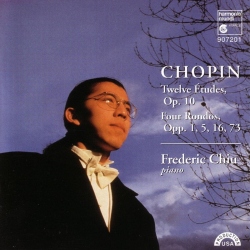
10:24
3

Introduction in C minor and Rondo in E flat major, Op. 16
Introduction and Rondo in E-flat major, Op. 16
10:34