


Samuel Coleridge-Taylor
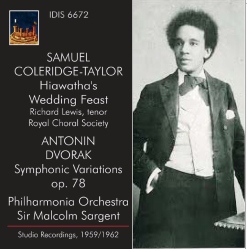
Hiawatha's Wedding Feast
Released Album
Recent Album
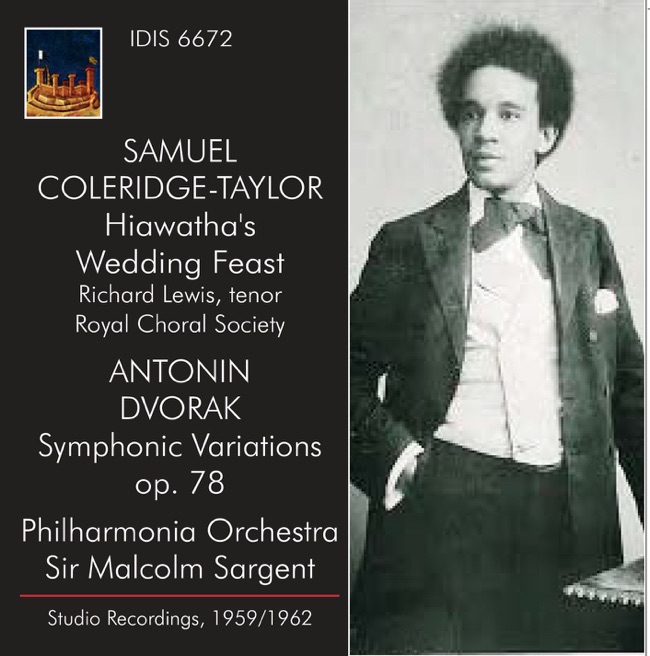
Works Info
Composer:Samuel Coleridge-TaylorGenre:MiscellaneousStyle:MiscellaneousAverage_duration:119:50Hiawatha's Wedding Feast is a choral work composed by Samuel Coleridge-Taylor in 1898. It premiered on November 11, 1898, at the Royal College of Music in London. The work is based on the poem "The Song of Hiawatha" by Henry Wadsworth Longfellow. The work is divided into three movements. The first movement, "The Introduction," sets the scene for the wedding feast of Hiawatha and Minnehaha. The music is lively and celebratory, with a sense of anticipation and excitement. The second movement, "The Wedding Feast," is the centerpiece of the work. It begins with a solo voice singing a traditional Native American melody, which is then taken up by the choir. The music is rhythmic and energetic, with a strong sense of dance and celebration. The choir sings in unison and harmony, with occasional solo passages. The music builds to a climax as Hiawatha and Minnehaha exchange their vows. The final movement, "The Departure of Hiawatha," is more somber in tone. It begins with a solo voice singing a mournful melody, which is then taken up by the choir. The music is slow and mournful, with a sense of loss and sadness. The choir sings in harmony, with occasional solo passages. The music gradually fades away as Hiawatha departs from the wedding feast. The characteristics of Hiawatha's Wedding Feast are its use of traditional Native American melodies and rhythms, its lively and celebratory tone, and its strong sense of dance and movement. The work is also notable for its use of choral singing, with the choir singing in unison and harmony, and occasional solo passages. Overall, Hiawatha's Wedding Feast is a vibrant and engaging work that captures the spirit of Longfellow's poem.More....
Works Music
Released Music
1
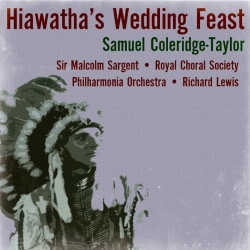
Hiawatha's Wedding Feast
You shall hear how Pau-Puk-Keewis / Then the handsome Pau-Puk-Keewis / He was dress’d in shirt of doe-skin / First he danc’d a solemn measure / Then said they to Chibiabos
17:25

Main Perform Artists
Tenor (Vocal)
Choir/Chorus