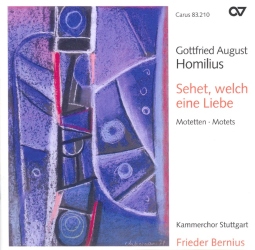
Gottfried August Homilius
Wünschet Jerusalem Glück, Motet for Chorus
Released Album
Recent Album
Works Info
Composer:Gottfried August HomiliusGenre:ChoralStyle:ChoralAverage_duration:2:10Gottfried August Homilius was a German composer and church musician of the late Baroque era. He was born in Rosenthal, Saxony, on February 2, 1714, and died in Dresden on June 2, 1785. Homilius was a prolific composer of sacred music, including cantatas, oratorios, and motets. One of his most famous works is the motet "Wünschet Jerusalem Glück" (Wish Jerusalem Happiness), which was composed in 1755. The motet "Wünschet Jerusalem Glück" is a choral work for four-part mixed choir. It is based on a text from Psalm 122, which is a song of pilgrimage to Jerusalem. The motet is divided into three movements, each with its own distinct character. The first movement is marked "Allegro" and is in a lively 3/4 time signature. The choir sings the opening line of the psalm, "Wünschet Jerusalem Glück" (Wish Jerusalem Happiness), in unison. The music then becomes more complex as the choir sings in four-part harmony. The movement is characterized by its joyful and celebratory tone, reflecting the pilgrims' excitement as they approach Jerusalem. The second movement is marked "Adagio" and is in a slower 4/4 time signature. The choir sings the second line of the psalm, "Es möge wohlgehen denen, die dich lieben" (May those who love you be at peace). The music is more contemplative and introspective, reflecting the pilgrims' reverence for the holy city. The third movement is marked "Allegro" and is in a lively 3/4 time signature. The choir sings the final line of the psalm, "Friede sei inwendig in deinen Mauern und Glück in deinen Palästen" (May there be peace within your walls and happiness within your palaces). The music is once again joyful and celebratory, reflecting the pilgrims' sense of fulfillment as they enter the city. Overall, "Wünschet Jerusalem Glück" is a beautiful and uplifting work that captures the spirit of pilgrimage to Jerusalem. Homilius' use of four-part harmony and contrasting tempos creates a sense of movement and progression, reflecting the pilgrims' journey to the holy city. The motet premiered in Dresden in 1755 and remains a beloved work of sacred choral music to this day.More....
Works Music