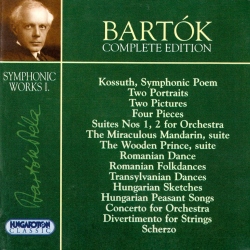
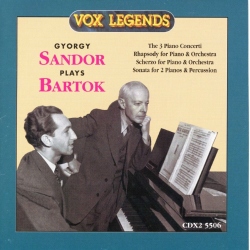
Béla Bartók
Scherzo for piano & orchestra, Sz. 28, Op. 2
Released Album
Recent Album
Works Info
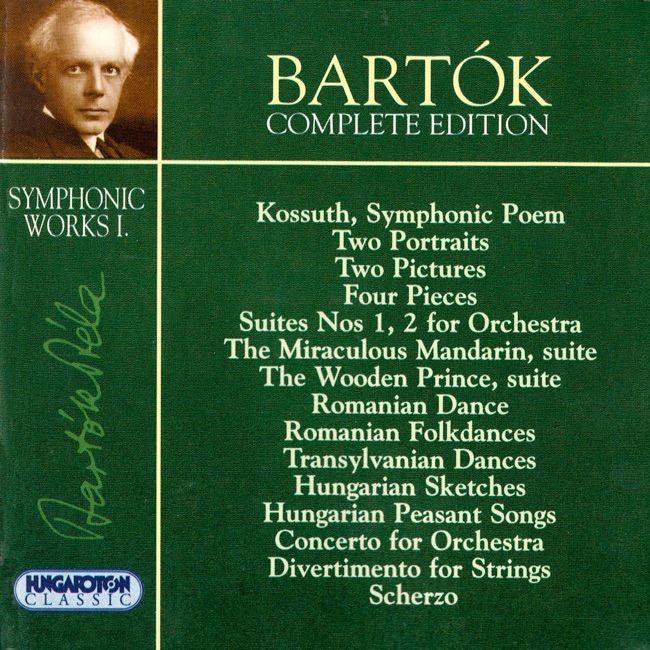
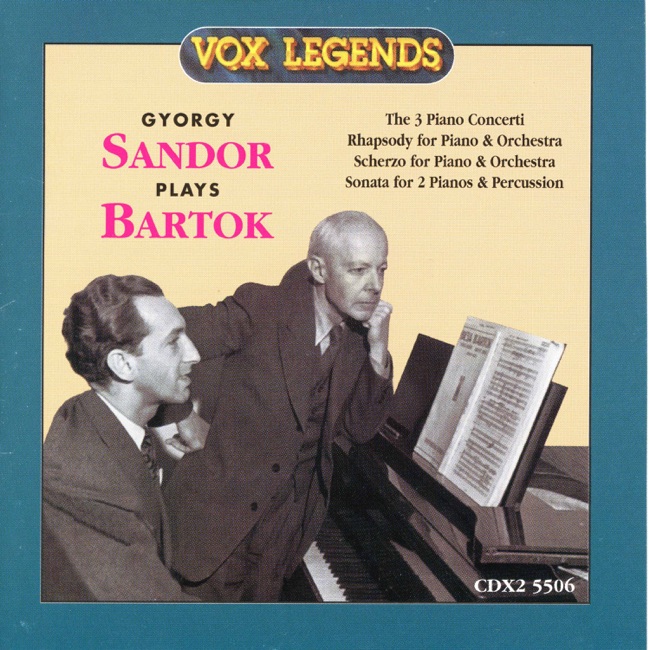
Composer:Béla BartókGenre:ConcertoStyle:ConcertoCompose Date:1904Average_duration:34:03Béla Bartók's Scherzo for piano and orchestra, Sz. 28, Op. 2, was composed in 1903 when the composer was only 22 years old. The piece was premiered on November 24, 1904, in Budapest, with the composer himself as the soloist and the Budapest Philharmonic Orchestra conducted by Sándor Erkel. The Scherzo is a one-movement work that lasts approximately 10 minutes. It is characterized by its lively and playful nature, with a fast tempo and a rhythmic drive that propels the music forward. The piece is in sonata form, with a brief introduction followed by the exposition, development, and recapitulation. The Scherzo begins with a short introduction featuring a solo piano, which sets the tone for the rest of the piece. The main theme is then introduced by the orchestra, with the piano joining in shortly after. The theme is lively and playful, with a syncopated rhythm that gives it a sense of forward motion. The development section of the Scherzo is characterized by its use of polyrhythms and complex harmonies. Bartók uses a variety of techniques to create tension and build momentum, including sudden shifts in dynamics and unexpected changes in tempo. The recapitulation brings back the main theme, but with some variations and modifications. The piece ends with a coda that features a virtuosic piano cadenza, which showcases the technical prowess of the soloist. Overall, the Scherzo for piano and orchestra is a youthful and exuberant work that showcases Bartók's early style. It is characterized by its rhythmic drive, complex harmonies, and virtuosic piano writing. Despite its relatively short length, the Scherzo is a challenging and rewarding piece for both the soloist and the orchestra.More....
Works Music
Released Music