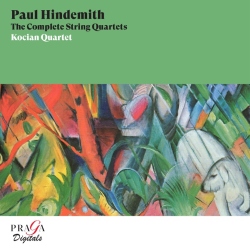
Paul Hindemith
Overture To "Fliegenden Holländer"
Released Album
Recent Album
Works Info
Composer:Paul HindemithGenre:ChamberStyle:QuartetCompose Date:ca. 1925Average_duration:7:46The Overture to Fliegenden Holländer is a composition by Paul Hindemith, a German composer, violist, and conductor. The piece was composed in 1926 and premiered on March 2, 1927, in Frankfurt, Germany. The overture is a part of the opera "The Flying Dutchman" by Richard Wagner, which Hindemith arranged for a chamber orchestra. The overture consists of three movements, with a total duration of approximately 10 minutes. The first movement is marked "Lebhaft" (lively) and begins with a fanfare-like motif played by the brass section. The music then transitions to a more lyrical section, featuring the strings and woodwinds. The movement ends with a return to the fanfare motif, played by the full orchestra. The second movement, marked "Langsam" (slow), is a more introspective section featuring the strings and woodwinds. The music is characterized by a mournful melody played by the violins, which is then echoed by the other instruments. The movement builds to a climax before fading away to a quiet conclusion. The final movement, marked "Lebhaft" (lively), is a fast-paced and energetic section featuring the full orchestra. The music is characterized by a driving rhythm and a sense of urgency, with the various sections of the orchestra trading off melodies and motifs. The movement builds to a thrilling conclusion, with the brass section playing a triumphant fanfare. Overall, the Overture to Fliegenden Holländer is a masterful arrangement of Wagner's original work, showcasing Hindemith's skill as a composer and arranger. The piece is characterized by its dynamic contrasts, intricate harmonies, and virtuosic orchestration, making it a favorite among both performers and audiences alike.More....
Works Music
Released Music